


Benefits of Two-Phase Orthodontic Treatment for Children

Early orthodontic treatment isn’t the right first move for every child. An evaluation around age 7 can help identify whether jaw growth, a bite problem, severe crowding, or the way permanent teeth are coming in may call for two phases of care. The benefits of two-phase orthodontic treatment can include addressing these concerns while a child is still growing, though many children can be treated in one comprehensive phase.
It’s understandable to wonder whether starting early means more treatment or a smoother path ahead. The answer depends on your child’s growth and dental development, not age alone. Here, you’ll learn which children may benefit, how an orthodontist assesses growth and tooth eruption, what happens during the resting period between phases, and what to expect if braces or aligners are recommended later.
Table of Contents
Who Is the Ideal Patient for Two-Phase Orthodontic Treatment?
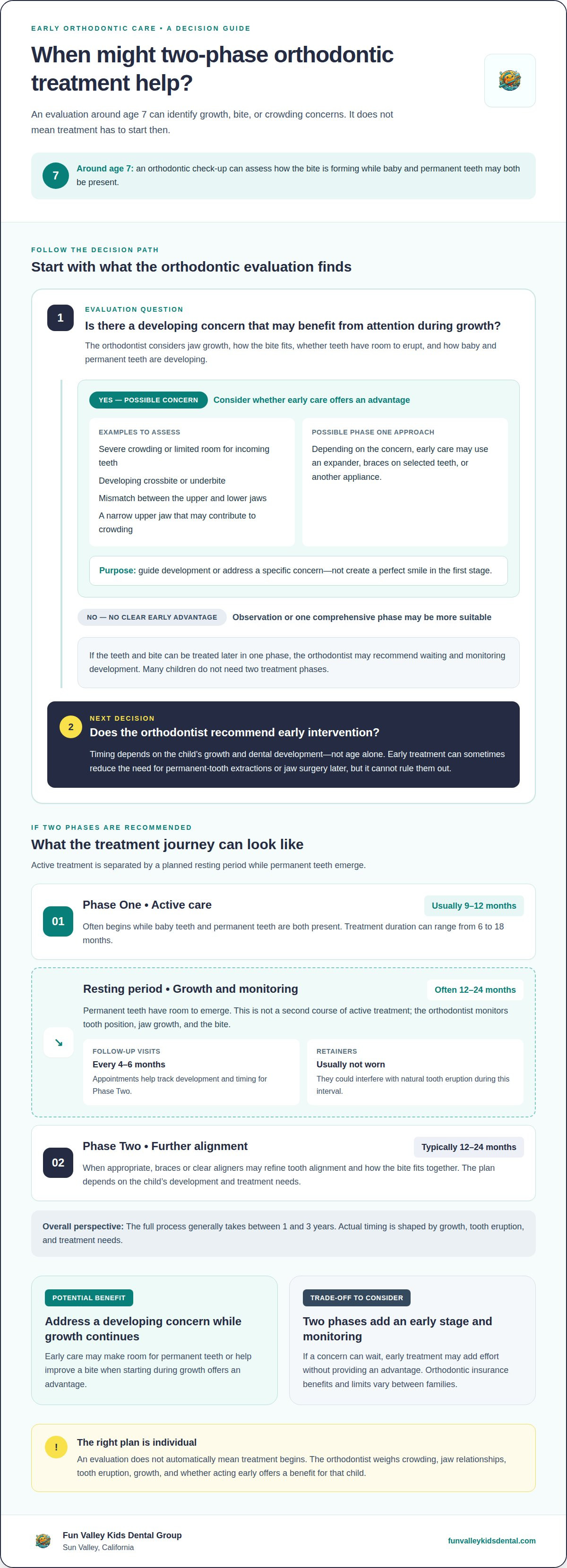
Two-phase treatment suits children whose developing jaws, bite, or tooth eruption could benefit from attention before all permanent teeth arrive. An orthodontic evaluation by age 7 can identify concerns such as severe crowding or a jaw discrepancy. It doesn’t mean treatment must begin then: many children can wait for one comprehensive phase.
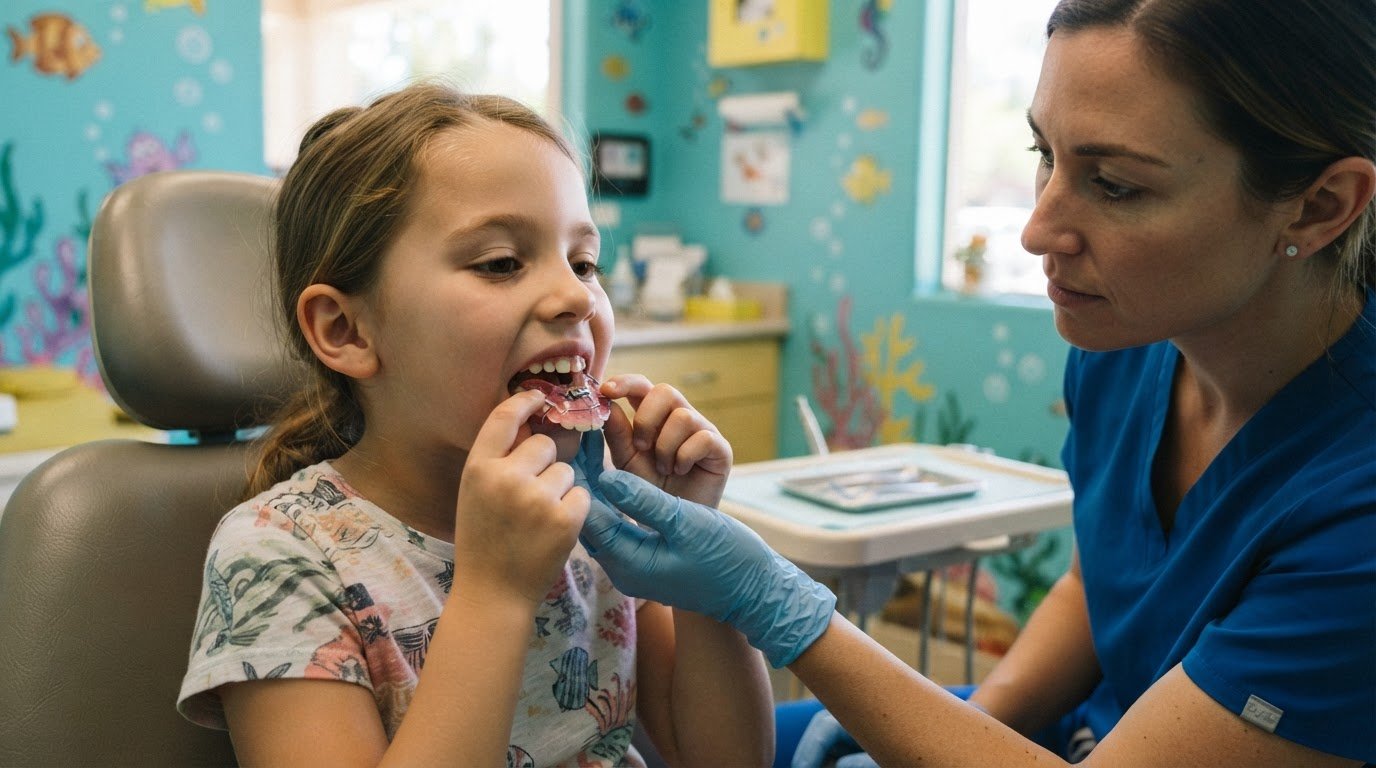
Crowding becomes a concern when incoming permanent teeth lack room or erupt out of position. A narrow upper jaw, for example, can leave the dental arch crowded; an expander may widen it while a child is growing. Bite problems can also prompt early evaluation, including a crossbite, underbite, or mismatch between the upper and lower jaws.
Timing matters because Phase One usually begins while baby teeth and permanent teeth are both present. An orthodontist considers how the bite fits, whether teeth have room to erupt, and whether guiding jaw growth could help. Depending on the concern, early care may involve an expander, braces on selected teeth, or another appliance.
The goal is to guide development, not create a perfect smile in the first stage. Early treatment may address a specific concern while growth continues, such as making room for permanent teeth or improving the bite. These benefits matter most when beginning early offers an advantage over waiting.
Compared with one-phase care, two-phase treatment adds an early stage before later refinement; it isn’t the better choice for every child. The full process generally takes between one and three years, with timing shaped by growth, tooth eruption, and treatment needs.
Early intervention can sometimes reduce the need for permanent-tooth extractions or jaw surgery later, particularly when growth guidance addresses a developing problem. It cannot rule out those treatments. The orthodontist considers crowding, jaw relationships, and tooth eruption before recommending an approach.
There are trade-offs. Starting early adds a treatment stage and monitoring before later orthodontic care. If a concern can wait, that first stage may add effort without providing an advantage. Insurance plans set their own orthodontic benefits and limits, so coverage varies between families.
For a child with severe crowding, a developing crossbite, or a jaw discrepancy, an early evaluation can clarify whether acting during growth matters. If the teeth and bite can be treated later in one phase, observation may be more suitable. The key is matching intervention to the child’s specific dental development.
The resting period between treatment phases
After Phase One, a resting period lets permanent teeth erupt while the orthodontist tracks development. Phase One often lasts 9-12 months, and Phase Two typically lasts 12-24 months; the exact schedule follows the child’s treatment needs.
Follow-Up Monitoring
Follow-up monitoring means periodic orthodontic visits during the pause between active treatment phases. These visits help track jaw growth, facial development, and the eruption of permanent teeth. A child may be seen every 4-6 months, giving the orthodontist opportunities to note changes and adjust the timing of Phase Two as the bite develops.
Phase Duration
Phase duration is the time spent in each active stage, separate from the resting period. Phase One commonly takes 9-12 months, though treatment can range from six to 18 months; Phase Two typically takes 12-24 months. These ranges help families picture the journey, while the child’s dental development guides the actual schedule.
The pause after Phase One isn’t a second course of active treatment. It gives permanent teeth room to emerge naturally, often over a resting period that can last 12 to 24 months. The orthodontist watches for changes in tooth position and bite rather than trying to move every tooth during this interval.
Retainers are usually not worn during the resting period because they could interfere with natural tooth eruption. That doesn’t mean the child’s progress is overlooked. Periodic appointments allow the orthodontist to monitor incoming teeth and check whether Phase One results remain stable as the mouth changes.
At a follow-up, the orthodontist can assess which permanent teeth have erupted, how much room remains, and whether the upper and lower teeth meet comfortably. For example, a newly erupted tooth may change the available space or reveal an alignment concern that was not apparent earlier. These observations help shape the Phase Two plan.
Families can use the pause to keep everyday dental routines steady. Careful brushing around any remaining appliance and keeping teeth clean support healthy gums and teeth as eruption continues. If an appliance affects tongue movement or speech, the orthodontist can explain its role in the plan and what to expect after it is removed.
The resting period is a planned part of care, not a sign that treatment has stalled. Regular monitoring helps the orthodontist decide when the next stage fits the child’s growth and dental development, rather than starting simply because a set amount of time has passed.
Orthodontic evaluation of growth and dental development
An orthodontic evaluation looks at jaw growth, the bite, and how baby teeth and permanent teeth are developing. It helps determine whether early intervention could address a concern or whether later treatment makes more sense.
Timing the Initial Evaluation
The American Association of Orthodontists recommends an initial orthodontic check-up no later than age 7. At this stage, a child may have both baby teeth and permanent teeth, allowing the orthodontist to assess how the bite is forming. An evaluation doesn’t automatically mean treatment begins; it provides a chance to identify issues that may benefit from observation or early care.
An earlier assessment may be useful when a child has a visible jaw discrepancy, crossbite, or difficulty biting comfortably. The orthodontist considers dental development and the relationship between the jaws, rather than relying on age alone. This helps distinguish a concern that needs timely attention from one that can be monitored as teeth emerge.
Evaluation Around Age Seven
An evaluation around age 7 is a developmental check, not a promise that braces will start. The orthodontist examines tooth position, bite, and jaw growth, and may use dental models, X-rays, or photographs to plan care. These records can help show how much room incoming teeth may have and whether the upper and lower jaws meet as expected.
For example, a narrow upper arch or crossbite may become clearer as permanent teeth appear. The orthodontist uses these findings to explain whether early treatment could guide growth or support healthier tooth eruption. If early intervention is not needed, monitoring development can still help identify changes at the right time.
Starting Phase One
Phase One commonly begins between ages 6 and 9, while a child still has a mix of baby teeth and permanent teeth. The age range is a guide, not a fixed start date. The orthodontist considers the child’s jaw growth, tooth eruption, and the specific problem before recommending whether treatment should begin.
Early care may be considered when growth guidance could help address a jaw relationship or make room for incoming teeth. A child with a developing bite concern may need a different plan from a child whose main issue is crowding. The aim is to address a problem at a useful stage, not correct every tooth before permanent teeth arrive.
Growth also affects facial balance and how the jaws relate to one another. Evaluating these changes during childhood can help the orthodontist decide whether intervention may prevent a developing concern from becoming more difficult to manage. Findings, not a birthday alone, guide the timing and type of care.
Who Ends Up Needing Further Treatments After Phase 2 Braces?
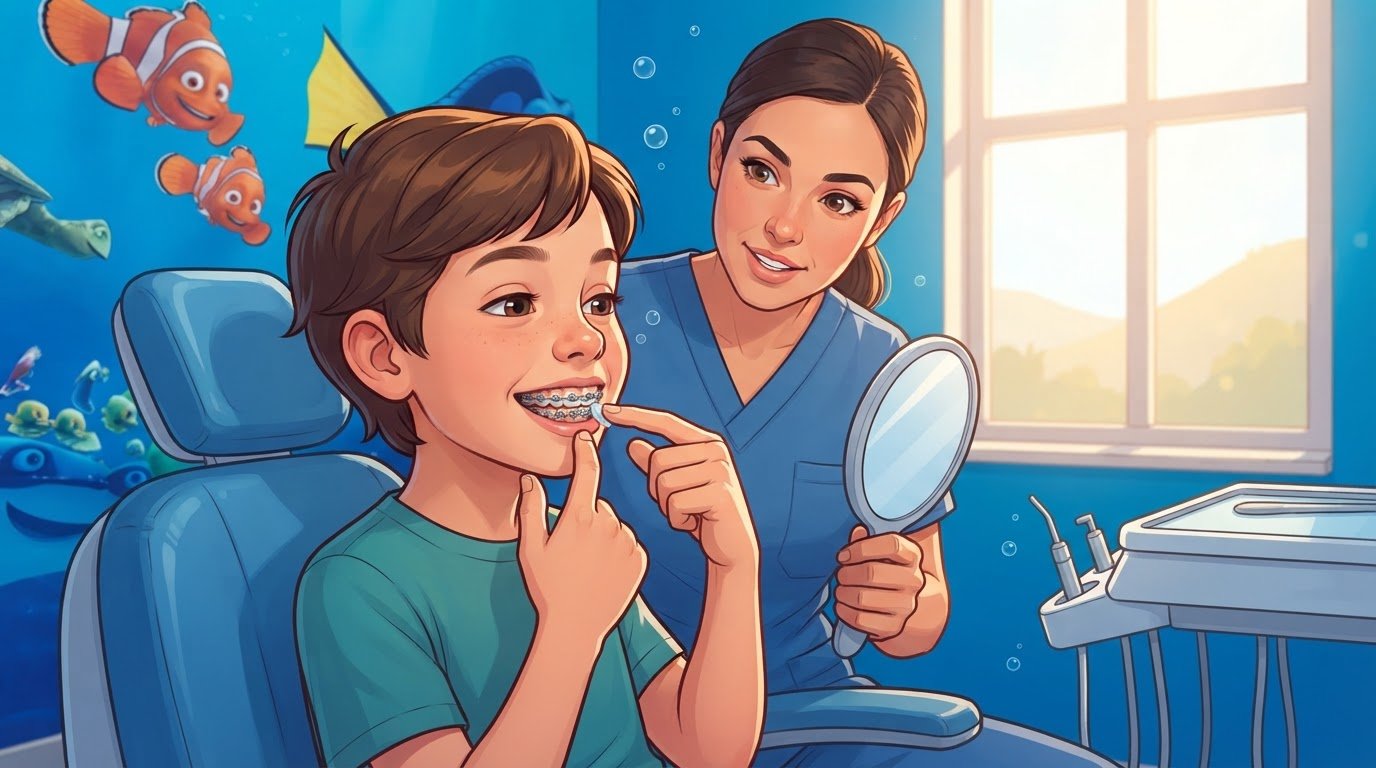
Phase Two aims to align permanent teeth and refine how the upper and lower teeth fit together. Traditional braces or clear aligners can move teeth into position, while the orthodontist considers bite function and jaw development. Finishing this stage does not always mean every concern is resolved; next steps depend on how the teeth and jaws respond.
Some children need additional orthodontic care after Phase Two if the bite remains uneven or teeth shift out of alignment. For example, when the upper and lower teeth do not meet evenly, pressure can affect how they function. An orthodontist evaluates the remaining bite relationship and tooth positions to determine whether further appliances or adjustments are needed.
Jaw development can also influence the final result. If the jaws continue to grow differently, this may affect how the teeth fit after braces. Genetics can contribute to misaligned teeth or jaw structure concerns, so family patterns may be part of the orthodontic picture. Growth and bite findings help explain why some treatment plans need further attention.
Clear aligners and braces both aim to improve tooth alignment, but they are not interchangeable for every patient. The choice depends on the child’s bite, tooth position, dental development, and orthodontic evaluation. Braces may refine tooth positions; clear aligners may suit other treatment plans. The goal is a smile that looks good and supports comfortable function.
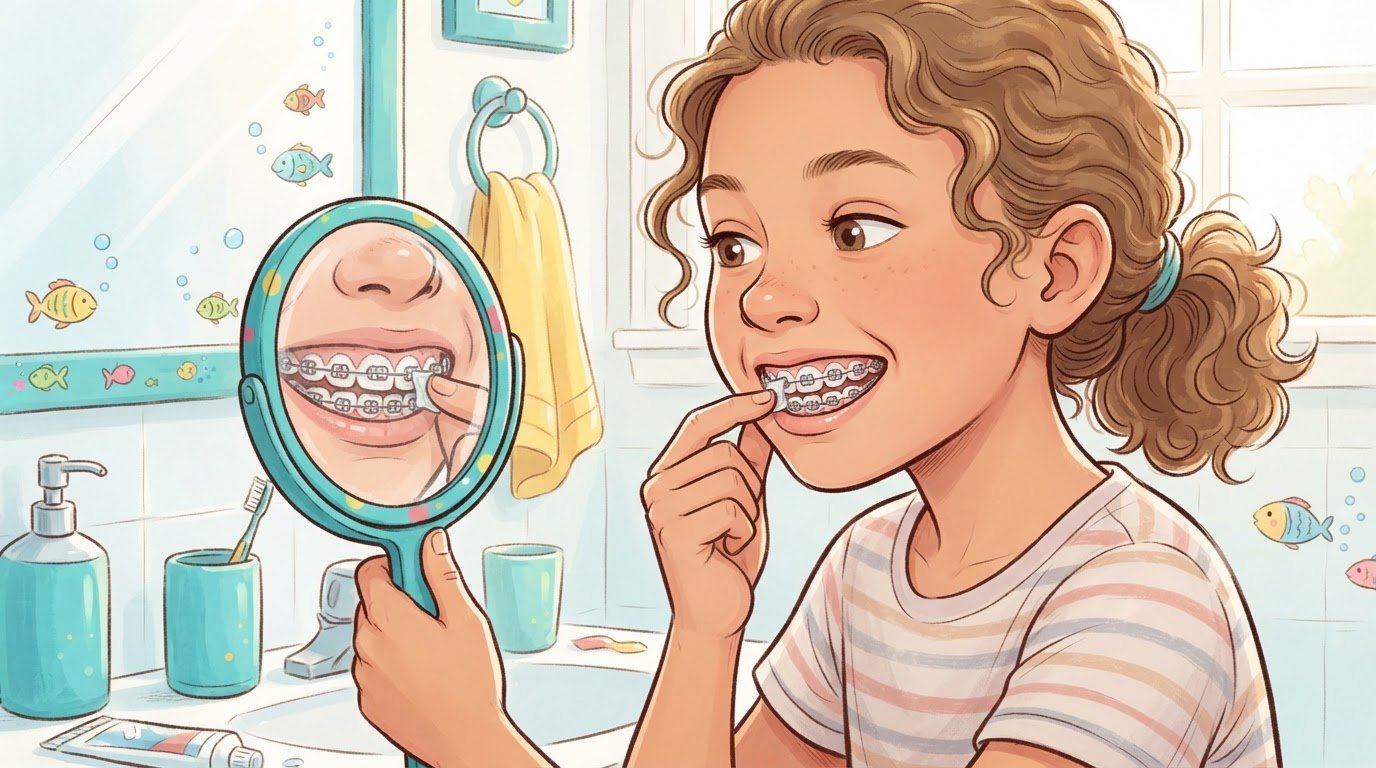
Healthy dental habits matter during and after Phase Two. Plaque buildup and tooth decay can complicate orthodontic care and lead to a need for additional treatment. Brushing around braces, cleaning between teeth, and keeping dental appointments help protect teeth while appliances are in place. If decay develops, the orthodontic plan may need to account for treatment.
After active orthodontic treatment, retainers help maintain tooth position. Teeth can shift over time, especially if the bite is uneven or retainers are not worn as directed. Retention is a separate part of treatment, not another round of braces, and the orthodontist explains how it fits each child’s plan.
Further treatment isn’t automatic after Phase Two. The orthodontist considers the final alignment, bite function, jaw growth, oral health, and any tooth movement since braces or aligners were removed. For significant remaining concerns, additional appliances or jaw surgery may be considered. Regular follow-up helps identify changes and determine whether another step is needed.
Which children may benefit from two-phase treatment
Two-phase treatment is most relevant when a developing concern could be addressed more effectively during growth than later. Key considerations include the child’s teeth and jaws, how the bite fits, and whether permanent teeth have enough room. The aim isn’t to start early automatically, but to identify children whose specific orthodontic needs make an early stage worthwhile.
Severe crowding is one reason to consider an early evaluation. If a narrow upper arch leaves little room for incoming teeth, an orthodontist can assess whether guiding development could increase available space. A crossbite, underbite, or other mismatch between the upper and lower jaws can also matter, especially when it affects how the teeth meet or function.
Jaw concerns can matter more than crooked front teeth alone. For example, if the lower jaw sits too far forward or the upper and lower jaws do not align comfortably, an orthodontist considers growth and bite together. Early treatment is most relevant when a developing jaw relationship can be addressed during childhood, rather than simply straightening visible teeth.
Tooth eruption can offer another clue. When permanent teeth appear crowded, erupt out of position, or lack space, an orthodontist considers the arch shape and eruption path. In some cases, early guidance may help create room or support healthier eruption. The specific concern, not one crooked tooth, guides the decision.
Children with thumb or finger sucking that continues past age 5 may also warrant an orthodontic assessment, particularly if the habit affects tooth position or bite development. The habit alone doesn’t establish a need for two phases. The orthodontist looks for a related change in the teeth and jaw before deciding whether early intervention offers a practical advantage.
Not every child with crowding or a bite difference needs two phases. Many orthodontic concerns can be treated in one comprehensive stage after more permanent teeth erupt. If growth guidance would not change the treatment approach, starting early can add a stage without a specific advantage. This helps explain why an evaluation may recommend monitoring instead of immediate appliances.
Early treatment can sometimes reduce the likelihood of permanent-tooth extractions or jaw surgery later, but it does not guarantee that either will be avoided. The orthodontist considers crowding, jaw growth, tooth eruption, and the child’s bite to determine whether early care could help prevent a more difficult problem.
For children with severe crowding, a developing jaw discrepancy, or an eruption concern, an orthodontic evaluation can clarify whether timing matters. Schedule an orthodontic evaluation to discuss your child’s bite, growth, and dental development.
Fun Valley Kids Dental Group: Fluoride Treatments
Fun Valley Kids Dental Group in Sun Valley provides pediatric dental exams, cleanings, fluoride treatments, and dental sealants to support children’s oral health during orthodontic care. Exams assess teeth and gums, while cleanings and sealants can form part of a preventive care plan. The dentist recommends care based on the child’s needs and examination. Routine dental visits help families keep oral health on track alongside orthodontic milestones. Fun Valley Kids Dental Group serves families in Sun Valley, Pacoima, Arleta, Panorama City, North Hollywood, Burbank, and Sylmar. Schedule a pediatric dental appointment to discuss your child’s preventive care.
Make the Next Orthodontic Conversation Count
Your child’s orthodontic journey is a chance to make thoughtful decisions together, one step at a time. Before the next appointment, consider what changes you’ve noticed in your child’s bite, tooth position, or comfort while chewing. Sharing those observations can help focus the conversation on the concerns that matter most to your family.
The benefits of two-phase orthodontic treatment depend on how a child’s dental development and treatment needs fit together. At your visit, ask what the recommended approach aims to address, which milestones will guide progress, and how the orthodontist will determine when the next stage is appropriate. The right plan reflects your child’s individual needs.
For guidance on your child’s orthodontic care, contact Fun Valley Kids Dental Group. You can take the next step with confidence and help your child move forward with a brighter smile.
Frequently Asked Questions
What if I delay treatment?
Delaying treatment may mean a growth-related concern is addressed later, when the jaw is less actively developing. For example, a crossbite or limited space for incoming teeth may still need care, but the orthodontist’s options can change as the child grows. An evaluation helps distinguish a concern that benefits from timely attention from one that can be monitored. Waiting should be guided by the child’s bite and dental development, not guesswork.
How Can My Child Benefit From Two-Phase Treatment?
Your child may benefit if an early stage can address a specific issue before all permanent teeth arrive. For instance, treatment may guide a jaw relationship or make room for erupting teeth. Later care can then focus on aligning permanent teeth. The value depends on the problem being treated: a child whose concern can wait may do just as well with one comprehensive treatment phase.
When Should My Child See an Orthodontist?
Children should have an initial orthodontic evaluation by age 7. This visit can reveal developing concerns even if your child still has baby teeth and no obvious discomfort. An earlier appointment may be appropriate if you notice a crossbite, difficulty biting, or a jaw that appears out of line. The evaluation is a way to understand development and timing; it doesn’t automatically mean your child needs braces.
Why Two Phases?
Two phases separate early guidance from later tooth alignment. The first stage can address a growth or bite concern while a child is developing; the later stage refines the position of permanent teeth. This approach is useful when addressing a specific issue early can shape the next steps. It is not simply a way to start braces sooner, and the early stage does not replace later orthodontic treatment.
Should Everyone Consider The Two-Phase Approach?
No. Two-phase care isn’t necessary for every child, because many orthodontic concerns can be treated in one comprehensive phase. The decision depends on whether early treatment offers a meaningful advantage for a particular bite, jaw relationship, or eruption concern. For example, a child whose teeth are developing in a healthy position may need monitoring rather than appliances. An orthodontic assessment helps clarify which approach fits.
Why Not Wait Until the Teen Years?
Waiting may be suitable when a child’s orthodontic concern does not need attention during growth. However, some jaw or bite issues may be easier to guide while a child is still developing. A young child with a crossbite, for example, may need an earlier assessment than a teen whose main concern is crooked permanent teeth. The difference is the type of problem, not a rule that every child should begin treatment early.
What is two-phase orthodontic treatment and how does it work?
Two-phase orthodontic treatment is care delivered in two active stages, with a resting period between them. The first stage addresses a selected developmental concern; later treatment focuses on aligning permanent teeth and improving how the bite fits. During the pause, the orthodontist monitors dental development as more teeth come in. The plan adapts to the child’s growth and the specific issue being treated.
What are the benefits of two-phase orthodontic treatment for children?
The benefits of two-phase orthodontic treatment can include guiding jaw development, making room for incoming teeth, or addressing a bite concern while a child is growing. For example, early care may help manage a narrow upper arch before crowding becomes more difficult to address. These are potential advantages, not a guarantee that later treatment will be unnecessary. The child’s orthodontic findings determine whether an early phase is worthwhile.
Comments