


Hollywood Pediatric Dental Specialist Referrals and Search

A child’s dental care may involve more than one kind of specialist. A pediatric dentist focuses on children’s teeth and dental needs, while an orthodontist evaluates tooth position and bite alignment. For families in Sun Valley and nearby communities, navigating a pediatric dental specialist referral may help connect a child with appropriate care at Fun Valley Kids Dental Group, although some offices accept appointments without one.
It’s understandable to want a clear first step, especially when you’re helping your child feel comfortable about dental visits. The right path depends on the care your child needs and the receiving office’s referral process.
Here, you’ll learn which specialists care for children, when a referral may be needed, and how to find pediatric dental services in the San Fernando Valley. We’ll also cover what to prepare when arranging a visit, so you can move forward with greater confidence.
Table of Contents
Referral and consultation with dental specialists
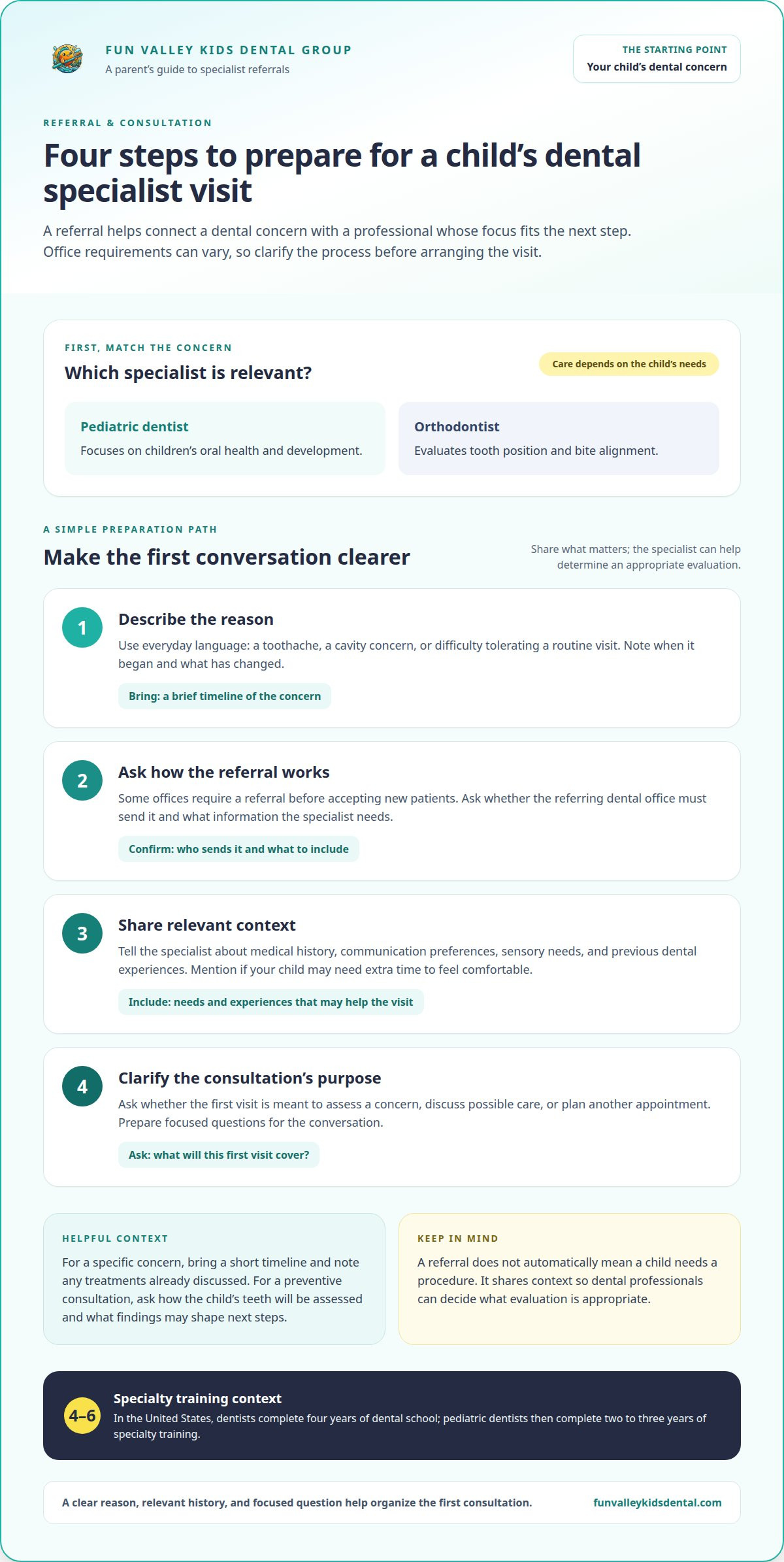
A referral connects a child’s dental concern with a professional whose training suits the next step. For families in Sun Valley, start by identifying what prompted the search: a dental problem, a developmental concern, or a recommendation for another opinion. The reason helps determine the type of specialist and the information to share. For example, tooth pain calls for a different discussion than concerns about a child’s sensory needs.
A pediatric dentist focuses on children’s oral health and development. In the United States, dentists complete four years of dental school, followed by two to three years of specialty training for pediatric dentists. This additional preparation is relevant for children whose care may need to account for their development or support needs.
Children with autism, physical disabilities, Down syndrome, or ADHD may benefit from specialized pediatric dental care. A referral can describe the concern, explain the child’s needs, and help the receiving office prepare for the first conversation. It provides a clear starting point, such as noting that unfamiliar sounds make dental visits difficult.
Use these steps to organize the referral and consultation:
Describe the reason. Note the issue in everyday language, such as a toothache, a cavity concern, or difficulty tolerating a routine visit. Include when it began and what has changed.
Ask about the referral process. Some dentists require a referral before accepting new patients. Ask whether the referring dental office must send it and what information the receiving specialist needs.
Share relevant context. Tell the specialist about the child’s medical history, communication preferences, sensory needs, and previous dental experiences. For example, mention if a child needs extra time to become comfortable in a new setting.
Clarify the consultation’s purpose. Ask whether the first visit is intended to assess a concern, discuss possible care, or plan another appointment. This helps families prepare focused questions.
For a preventive consultation, parents can ask how the specialist will assess their child’s teeth and what findings may shape the next steps. If the referral addresses a specific concern, bring a brief timeline and note any treatments already discussed. These details keep the conversation focused on the child’s needs and healthy smile.
A referral doesn’t automatically mean a child needs a procedure. It helps dental professionals share context and decide what evaluation is appropriate. A clear reason, relevant history, and focused question make the first consultation easier to navigate for caregivers and children.
Searching by dental specialty
Start with the concern, then match it to a dental specialty. For routine oral health, search for a pediatric dentist or children’s dentist near Sun Valley, California. For questions about crowded teeth, tooth position, or bite alignment, look for an orthodontist who treats children. This distinction helps narrow your options before comparing appointments.
Use location and specialty terms together, such as “pediatric dentist in Sun Valley” or “children’s orthodontist near North Hollywood.” Families in Pacoima, Arleta, Panorama City, Burbank, and Sylmar can include their community in a search, too. A practice serving children may describe its approach to first visits, preventive care, and helping young patients feel comfortable.
For families using Medicaid or CHIP, the Insure Kids Now Dental Provider Locator can help find dental providers. Dentists listed there serve children, including providers categorized as general dentists rather than pediatric dentists. If your search concerns a child’s specific needs, review the listed specialty and contact the practice about the care your child needs.
Try these steps to make the search more focused:
Name the need. Choose a starting category, such as a pediatric dentist for a check-up or an orthodontist for bite and alignment questions. A clear category makes search results easier to sort.
Set the location. Add Sun Valley or a nearby community your family can reasonably reach. This helps focus results on California providers and avoid listings in places with similar city names.
Read the service description. Look for language about children, the concern, and the type of appointment. For example, a child with a toothache needs a different search focus than a child whose teeth appear crowded.
Contact the office before booking. Ask whether it accepts new patients under your selected benefit plan and whether a referral is required. These details can shape the next step.
For an urgent dental concern, choose “No preference” in the locator’s new-patient search option. This setting returns the greatest number of possible dentists, broadening the search when time matters. Describe your child’s symptoms clearly when contacting an office so the team understands the reason for the appointment.
Language can also shape a useful search. Fun Valley Kids Dental Group can assist families in English, Spanish, Armenian, and Russian. For a routine starting point, explore pediatric dental exams as you consider child-focused care.
Does dental insurance require a referral for pediatric dental specialists?
There isn’t one referral rule for every child’s dental care. Some dental offices require a referral from another dentist before accepting new patients, while insurance plans have their own benefit and access terms. For a Hollywood pediatric dental specialist referral, treat the office’s referral process and the plan’s requirements as separate questions.
A referral is a dentist’s communication explaining why a specialist’s evaluation is requested. Insurance coverage concerns which services the plan covers and under what conditions. A referral alone doesn’t establish that a service is covered, and coverage information doesn’t tell you whether the specialist requires a referral to schedule.
Before arranging an appointment, contact the dental office and the insurance carrier. Ask whether the specialist accepts new patients under your child’s selected benefit plan, whether the office requires a referral, and whether the plan has referral rules for that specialty. These questions distinguish the office’s intake policy from the plan’s benefits.
Keep the details together. Have your child’s plan information ready, identify the specialty you’re seeking, and write down the answers. For example, a parent seeking an orthodontic evaluation can ask whether a referral is needed to book and whether orthodontic services are included in the child’s benefits. These are related, but separate, questions.
For children enrolled in Medicaid or CHIP, coverage for services such as check-ups, X-rays, fluoride treatments, dental sealants, and fillings depends on the child’s plan. Verify covered services with the insurance carrier and the dental office. Coverage of a particular service doesn’t mean every specialist visit follows the same referral process. The office’s new-patient policy and the child’s plan terms still affect scheduling.
Use this short checklist during calls:
Ask the office: Does this specialty require a referral before scheduling?
Ask the plan: Does the child’s benefit plan require a referral for this type of specialist visit?
Clarify the next step: Who sends the referral, and what information should it include?
Record the response: Note whether the answer concerns appointment access, covered services, or both.
If the answers differ, ask each party to clarify its own requirement. The dental office explains its appointment process; the insurance carrier explains the child’s plan benefits. This distinction helps families avoid mistaking a scheduling rule for a coverage decision or assuming a referral automatically settles both.
Contact the dental office to ask whether it accepts new patients under your child’s selected benefit plan and what its referral policy is.
How do parents transfer dental records and X-rays when requesting a specialist referral?
Dental records give a specialist context for assessing a child’s concern. Useful materials often include recent exam notes, treatment history, and relevant X-rays. Start by asking the current dental office which records it can send and what it needs from you. The specialist’s office can explain which items would support the planned consultation.
Make your request specific. Identify your child, the receiving dental office, and the reason for the referral, such as a tooth problem or orthodontic evaluation. Ask the current office whether it needs a signed release form and how it can transfer the records. The receiving specialist may also provide instructions about where to send them.
X-rays need context, not just images. Ask the dental office to include the date they were taken and any notes explaining the area shown. A pediatric dentist may take X-rays when appropriate for the child’s age and when they are considered necessary. A specialist can then decide whether existing images help with the consultation or another evaluation is appropriate.
Use this sequence to keep the handoff organized:
Contact the receiving office. Ask which records are useful for the appointment and how they should be delivered. For example, an orthodontic consultation may call for information about tooth position and bite concerns.
Request records from the current office. Name the receiving office and describe the referral reason. Ask whether the office needs a release form before sending anything.
Include relevant history. Share treatment notes tied to the concern, such as a previous filling near a tooth that now hurts. Avoid sending unrelated details unless the specialist requests them.
Clarify the handoff. Ask whether the records will be sent directly or provided to you. If the appointment is approaching, let the receiving office know records are being requested.
Keep a simple record of your request: the date, the office contacted, and what it agreed to send. If the specialist hasn’t received the materials before the visit, tell the team which office has them. This gives staff a clear starting point without asking your child to repeat a long dental history.
Records support the conversation, but they don’t replace an examination. The specialist considers the child’s current concern, dental development, and available images together. A referral to a pediatric dental specialist serving families in Sun Valley can go more smoothly when the reason for consultation and relevant records are shared.
Pediatric dentist
A pediatric dentist focuses on children’s teeth, oral development, and dental care. In the United States, dentists complete four years of dental school, followed by two to three years of specialty training for pediatric dentists. This additional training prepares them to address dental needs throughout childhood, from early teeth through the teenage years.
A child can see a pediatric dentist for preventive visits or a specific concern. Dental professionals recommend a first visit within six months of the first tooth coming in or by the child’s first birthday, whichever comes first. After that, routine check-ups and cleanings should take place every six months, starting at least by age one. These visits let the dentist assess oral health and discuss habits such as brushing.
Parents may seek a pediatric dentist for issues beyond a routine check-up. For example, a dentist can discuss thumb-sucking habits or evaluate crooked teeth and a misaligned bite. Early orthodontic treatment may be considered for some children. The dentist’s examination helps identify whether the concern calls for ongoing pediatric care or another specialist’s evaluation.
Children can receive regular dental care from a pediatric dentist until age 18. In their later teens, some may transition to a general dentist, depending on their needs and behavior. There isn’t one transition point that fits every family. A child with continuing dental needs may benefit from discussing timing and care continuity with the dental team.
To prepare for a pediatric dental appointment, parents can organize a few details:
Share the child’s age and concern. Mention whether the visit is a first check-up, a toothache, or a question about tooth alignment.
Describe relevant habits. For example, tell the dentist if thumb-sucking is a concern or brushing is difficult.
Bring the child’s dental history. Note previous visits, known concerns, and any treatment already discussed.
Ask about the next step. Find out whether the visit is focused on preventive care, evaluating a concern, or considering a specialist consultation.
A pediatric dentist can be a helpful starting point when you’re unsure which dental specialty your child needs. For a referral, the dentist can assess the concern and explain whether another evaluation may be appropriate. This gives families a clear path from the child’s current needs toward continued care for a healthy smile.
Preventive care also matters because cavities affect many children: Almost 28% of young children in the United States have had cavities by age 5. Over 50% of children in the United States have had cavities by age 11. These figures give parents added reason to raise questions about a child’s oral health during dental visits.
Pediatric dentists may counsel children who suck their thumbs and provide early orthodontic treatment for children with crooked teeth or a misaligned bite. Untreated tooth decay can negatively affect a child’s physical and social development and school performance. Sharing concerns with the dental team helps families discuss care that may be appropriate for their child.
Fun Valley Kids Dental Group
Fun Valley Kids Dental Group helps families take a clear next step when a child needs dental care or an initial evaluation. At its Sun Valley, California office, the practice provides pediatric dental exams and cleanings, as well as fluoride treatments and dental sealants. These visits give parents an opportunity to discuss a concern and understand whether their child may need further evaluation.
If you’re unsure where to begin, share what prompted your search, whether it’s a routine check-up or a question about your child’s teeth. The dental team can help clarify the next step in your child’s care.
Contact Fun Valley Kids Dental Group to discuss a pediatric dental appointment.
Plan your child’s next step with confidence
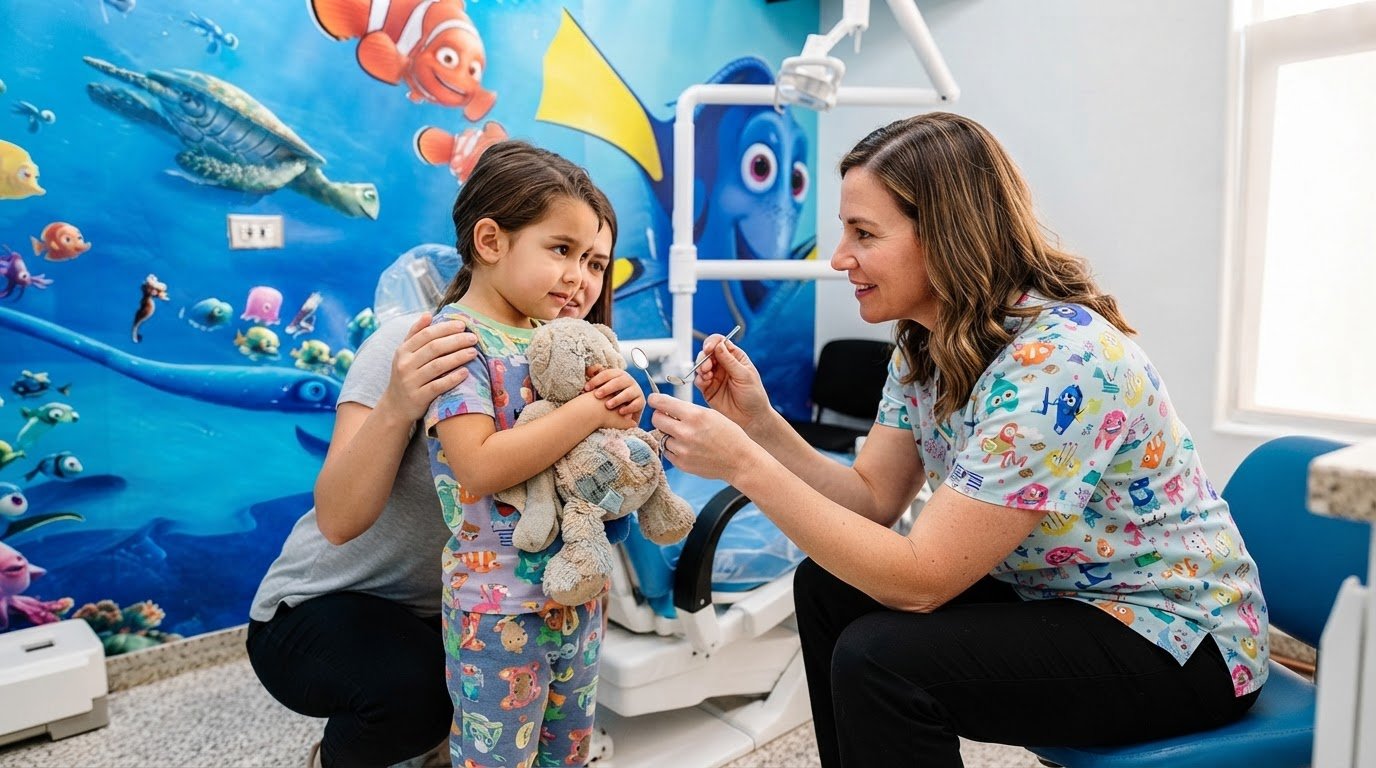
A specialist visit can give your child a calm, clear path forward. Before the appointment, tell your child where you’re going and explain the visit in simple, positive terms. You might say the dentist will listen, look, and help decide what comes next. A familiar comfort item or a favorite question can also help your child feel prepared.
A pediatric dental specialist referral can help coordinate your child’s care. Focus on your child’s concern and the next useful conversation, rather than trying to predict every step in advance. If you’re seeking child-focused dental care in the San Fernando Valley, Fun Valley Kids Dental Group is located in Sun Valley, California.
Contact Fun Valley Kids Dental Group to discuss your child’s dental care. Each thoughtful step can help make the journey feel more manageable for your family.
Frequently Asked Questions
What branch of dentistry deals with children's teeth?
Pediatric dentistry focuses on dental care for infants, children, and teenagers. Pediatric dentists receive specialty training in children’s oral health and development. General dentists may also treat children, depending on their practice. Orthodontists address tooth alignment and bite concerns, such as crowding or teeth that don’t meet comfortably. A child may see one or both specialties as their dental needs change.
How can a child get a referral to a pediatric dental specialist near Sun Valley, California?
Start by telling your child’s current dentist what prompted the search, then ask whether a referral is appropriate and how to arrange one. Share the concern and any relevant records the specialist requests. Families near Sun Valley, Pacoima, Arleta, Panorama City, North Hollywood, Burbank, and Sylmar can find child-focused dental care in their communities. Fun Valley Kids Dental Group is located in Sun Valley.
Do children need a referral to see a pediatric dentist?
Dental offices have different referral processes. Some require a referral before accepting new patients, while others may let families schedule directly. A child’s dental plan may have separate requirements. Before booking, ask the office whether it requires a referral and ask the plan whether one affects benefits. This separates appointment policies from insurance terms and clarifies the next step.
What pediatric dental services require a specialist referral, such as orthodontics, oral surgery, or special-needs care?
There isn’t one referral rule for every service. An orthodontic evaluation, a concern that may need oral surgery, or a child’s support needs may prompt a dentist to recommend specialist input. Whether a referral is required depends on the receiving office’s process and the child’s dental plan. For example, a dentist may recommend an orthodontic assessment for a bite concern, while another issue calls for a different evaluation.
What should parents consider when comparing pediatric dental specialists in Sun Valley, California, and nearby San Fernando Valley communities?
Match the specialist’s focus to your child’s concern, then compare the office’s services and approach to children’s needs. Confirm whether it accepts new patients under your child’s plan, whether it requires a referral, and what the plan covers.


Comments