


How to Handle a Permanent Tooth That Has Been Knocked Out

Five minutes can feel like a countdown, but it isn’t a reason to give up. Knowing what to do if a permanent tooth is knocked out means acting quickly: gently place the tooth back in its socket if possible, then get urgent dental care. A knocked-out permanent tooth may still be saved within the first hour when it’s handled carefully.
It’s understandable to feel shaken when a child loses a tooth in an accident. Focus on the next step, not panic or blame. Handling the tooth carefully and getting prompt dental care can improve the chance of saving it.
Here, you’ll learn what to do right away, how to hold and protect the tooth, what to do if it won’t go back into its socket, and why every minute matters. You’ll also see how to tell a permanent tooth from a baby tooth, so you can choose the safest next step for your child.
Table of Contents
Seeking emergency dental care
A knocked-out permanent tooth needs urgent dental care. Possible complications include root damage, injury to the tooth’s nerve, and harm to nearby tissues; a dentist must assess the mouth and tooth.
Dental insurance coverage for emergency treatment varies by U.S. plan and the care provided. Review your plan’s emergency dental benefits and claims instructions.
Call a dentist immediately. Tell the office a permanent tooth has been knocked out and describe any other injuries. A child should ideally see a dentist within 30 minutes. If no dentist can see the child in time, go to the nearest emergency room for care.
Transport the tooth carefully. Hold it by the crown, the visible chewing part, and avoid touching the root. If it cannot be put back in its socket, keep it moist in milk or the child’s saliva. Don’t wrap it in tissue or store it in water. Bring it with you, even if it looks damaged.
Get a displaced tooth assessed, too. A permanent tooth that has shifted but remains in its socket still needs prompt attention. Arrange dental assessment within 6 hours. Don’t push or pull the tooth into position; avoid chewing on it while traveling for care.
Don’t replant a baby tooth. A baby tooth knocked out by a fall or sports injury should stay out of the socket. Replanting it can harm the permanent tooth developing underneath. If you’re unsure whether the tooth is permanent, take it with you and ask the dentist to identify it.
Choose the right destination for related injuries. If the child also has a serious head or facial injury, heavy bleeding, or trouble breathing, go to an emergency room. For bleeding from the mouth or lip, apply steady, direct pressure with clean gauze for 5 minutes while arranging care. When minor trauma or related injuries require primary healthcare assessment, general practices such as hatmed.co.za provide comprehensive GP consultations to evaluate recovery.
Share the details at arrival. Tell the dental team when the injury happened, whether the tooth was replanted or kept moist, and what material you used. Mention pain, bleeding, or a tooth that feels loose or out of position. These details help the team assess the injury and plan immediate care.
A permanent tooth that comes out is a dental emergency requiring swift action. In the UK, seek an emergency dentist appointment even if the tooth cannot be found, while private clinics like Kingsford Medical Services can assist with general medical consultations and broader care following an accident.
Keeping the tooth moist if it cannot be reinserted
If the tooth won’t go back into its socket, protect its root surface and keep it moist while you travel for dental care. These steps can help preserve the tooth for the dentist to assess.
Place the tooth in a suitable liquid right away. Use milk, the child’s saliva, or saline if available. A solution made for preserving knocked-out teeth is another option. These choices keep the root from drying out during transport. Don’t leave the tooth on a dry surface while gathering supplies or arranging the trip.
Use a clean container for saliva. If milk or saline isn’t available, ask the child to spit into a small, clean cup, then place the tooth in the saliva. This keeps the tooth moist without requiring the child to hold it in their mouth. Keep the container upright and carry it with you to the dental clinic.
Choose milk without worrying about covering every part. The tooth doesn’t need to be fully submerged, but enough milk should keep it from drying out. Set the tooth gently in the container rather than wrapping it in tissue or cloth. Those materials can damage root-surface cells that matter for reattachment.
Avoid water as a storage liquid. Don’t store the tooth in tap or bottled water. Water can harm cells on the root surface. Don’t let the tooth dry while looking for a preferred container, and don’t scrub away dirt or blood. Take the tooth and its container directly to the dentist.
Keep the dentist’s assessment as the next step. Moist storage protects the tooth during the journey, but it doesn’t show whether the tooth can be replanted. The dentist will examine its condition and the socket. Even a chipped or visibly damaged tooth should travel with the child for assessment.
Discuss replacement choices if the tooth can’t be saved. A temporary denture may replace a missing tooth while the socket heals. After healing, a dentist may discuss a bridge or dental implant. For children, the next steps depend on the mouth’s development and the individual dental evaluation. Arrange a pediatric dental evaluation to discuss the injury and appropriate care.
Immediate replantation of a knocked-out permanent tooth
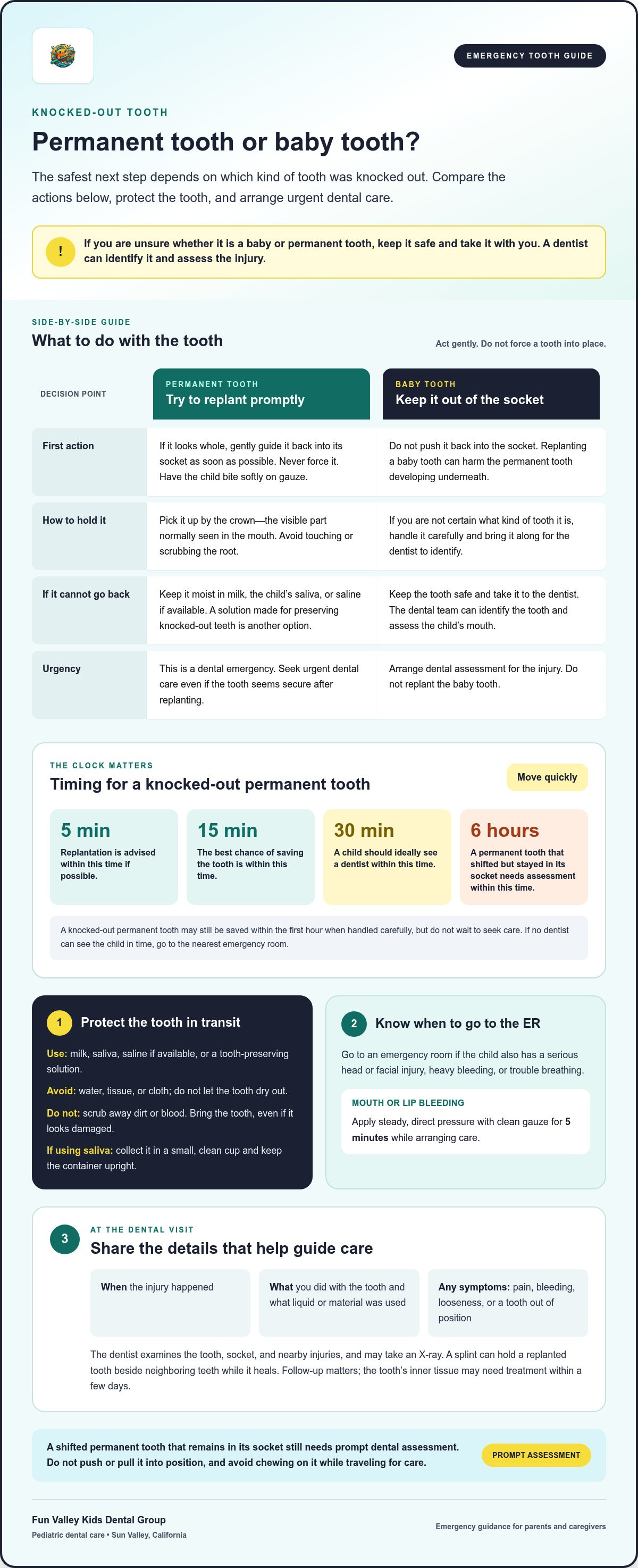
A permanent tooth has a better chance of survival when returned to its socket promptly. A dentist examines the tooth and injury, may take an X-ray, and can splint the tooth to nearby teeth.
Replant the permanent tooth promptlyGently pick up the tooth by its crown, the part normally visible in the mouth. If it’s a permanent tooth and looks whole, guide it into its socket as soon as possible, then have the child bite softly on gauze. Replantation within five minutes is advised if possible; the best chance of saving it is within 15 minutes. Never force it into place.
Get dental treatment for the toothGet immediate dental care, even if the tooth seems secure. The dentist checks the tooth, socket, and nearby injuries, and may take an X-ray to assess damage. A splint can hold the replanted tooth beside neighboring teeth while it heals. Follow-up is important because the tooth’s inner tissue may need treatment within a few days.
Don’t replant a baby tooth. A baby tooth knocked out in a fall or sports accident should not be pushed back into its socket. Replanting it could injure the permanent tooth developing beneath it. If you can’t tell which kind of tooth came out, keep it safe and bring it to the dentist. The dentist can identify it and assess the child’s mouth.
Discuss options if replantation isn’t possible. A tooth that is badly damaged or cannot be returned to its socket still needs prompt dental assessment. The dentist will evaluate the socket and explain whether the tooth can be treated or needs replacement. A temporary denture may be used while the socket heals; a bridge or dental implant may be considered afterward.
Keep the tooth supported until care. After placing a permanent tooth back in its socket, ask the child to bite gently on gauze or soft cloth to steady it during the trip. If the tooth won’t sit fully in place, don’t push harder. Keep it moist in milk or the child’s saliva, and take it with you. Handle injuries calmly and avoid touching the root.
Keeping a tooth moist during transport
Keep the tooth supported or moist on the way to dental care. The best approach depends on whether you’ve returned it to its socket.
If the tooth is back in its socket, keep it steady. Have the child bite gently on gauze or another soft material. This can help hold the tooth in place during the trip. Don’t let the child test it with their tongue or fingers. Go directly for dental treatment, even if the tooth appears to stay in position.
If it won’t stay in the socket, switch to moist storage. Don’t push harder or keep adjusting the tooth. Place it in milk, saline, a balanced salt solution, or the child’s saliva. A clean cup with saliva is a practical option if other suitable liquids aren’t available. Carry the container carefully and leave the tooth immersed or moist.
Keep the tooth away from dry materials. Don’t wrap it in tissue, paper, or cloth, and don’t set it on a dry surface. These actions can damage the root’s surface cells. Place the tooth gently in its liquid container instead. Don’t scrub or scrape the root to remove dirt; take it to the dentist as it is.
Don’t use water for storage. Tap water and bottled water can harm cells on the root surface. If milk, saline, or the child’s saliva is available, use one of those instead. Keep the container upright as you travel, and avoid delays while looking for a special container. The priority is reaching dental care with the tooth protected.
Tell the dentist how you transported it. Explain whether the tooth was placed in its socket, held in saliva, or stored in milk or saline. Also share when the injury happened and whether the tooth moved during transport. These details help the dentist assess the tooth and decide on treatment. A replanted tooth may take 1 to 8 weeks to reattach successfully.
Continue directly to care, even if the tooth looks settled. A tooth that seems secure still needs a dentist’s assessment after an injury. If it becomes loose or slips out during the trip, put it in a suitable liquid rather than trying repeatedly to reposition it. Keep the child calm and avoid chewing with the injured area until the dentist evaluates it.
Urgency of a knocked-out permanent tooth
Even if five minutes have passed, don’t stop trying to save a permanent tooth. Act immediately: protect the tooth and get urgent dental care, because time outside the socket matters.
Start the trip to dental care without delay. Call ahead while traveling, if another adult can make the call. A dentist can assess the tooth and socket, then decide whether replanting or another treatment is appropriate. The first minutes are critical, but don’t treat a missed early window as a reason to wait or abandon care.
Think of the first hour as urgent, not as a guaranteed cutoff. A knocked-out permanent tooth may still be saved within the first hour when it’s handled carefully and action is quick. Outcomes become less favorable after 15 minutes, so every minute matters. That timing isn’t a reason to assume the tooth can’t be treated if more time has passed.
Use the five-minute mark to guide action, not panic. Replant the permanent tooth within five minutes if possible and safe to do so. If that moment has passed, keep moving toward dental care. Hold the tooth by its crown, avoid touching its root, and place it in milk or saliva if it won’t stay in its socket.
Don’t let a container become a reason to delay. Milk or saliva can help keep an unreplanted tooth moist during transport. Choose a clean container, place the tooth inside, and leave promptly. Don’t use water or wrap the tooth in tissue. If the tooth is already back in its socket, have the child bite gently on gauze.
Expect follow-up after the urgent visit. Replanted teeth may need a splint to hold them steady. For displacement injuries, splinting may last from 10 days to 3 months, depending on the injury. Dental nerve monitoring can begin at 6 weeks, and dentists may continue checking nerve vitality at six-month visits.
Keep monitoring the tooth after the first visit. Nerve damage can take as long as 8 years to result in nerve death, so a tooth that looks settled still needs follow-up. Keep scheduled dental reviews and tell the dentist about new pain, discoloration, or swelling. For prompt assessment after a child’s injury, schedule emergency pediatric dental care.
Fun Valley Kids Dental Group: Pediatric Dental Exams
Fun Valley Kids Dental Group provides pediatric dental exams in Sun Valley, California, including assessments after a tooth injury. Once urgent care has addressed the knocked-out tooth, an exam can help evaluate your child’s teeth and oral health and guide follow-up care.
For ongoing prevention, the practice also offers dental cleanings, fluoride treatments, and dental sealants. These services help families keep routine care on track as a child grows. The dentist can recommend care based on your child’s examination and needs.
Contact Fun Valley Kids Dental Group in Sun Valley to arrange a pediatric dental exam and discuss your child’s next steps.
Make a calm plan for the next step
A dental injury can unsettle the whole family, but a clear plan helps you focus on your child’s care. Keep the dentist’s contact details easy to find, and let another caregiver know where they’re saved. After an emergency visit, follow the dental team’s instructions and attend planned follow-up appointments. Ongoing care lets you discuss how your child’s mouth is healing and what support may help maintain oral health.
Knowing what to do if a permanent tooth is knocked out can help you act purposefully in a stressful moment. You don’t need to solve every question at once. Take the next step, tell the dental team what happened, and support your child as they recover.
For help planning your child’s dental care, contact Fun Valley Kids Dental Group. You and your child can move forward together with care and confidence.
Frequently Asked Questions
What happens after 5 minutes?
Even if five minutes have passed, the tooth may still be saved. Get urgent dental care; a permanent tooth may be saved within the first hour if handled carefully. Keep it moist if it hasn’t been returned to its socket, and tell the dentist when the injury happened. Even if more time has passed, don’t delay care or assume treatment is no longer possible.
Why is it so important to replant a tooth within 5 minutes?
Prompt replantation helps protect the living cells on the tooth’s root surface that support reattachment. Those cells can be damaged as the root dries, so time outside the socket matters. Five minutes is a suggested goal when replanting is possible, not a point after which you should stop. Careful handling and prompt dental treatment still matter if that window has passed.
What should I do immediately after a permanent tooth is knocked out?
If you’re wondering what to do if a permanent tooth is knocked out, first help your child stay still and check for other injuries. Find the tooth and pick it up by its crown. If it’s clearly permanent, gently return it to the socket if it goes in without force. Otherwise, keep it moist in milk or saliva. Arrange urgent dental care and tell the dentist when the accident happened.
How should I pick up and handle a knocked-out permanent tooth?
Pick up the tooth by its crown, the part normally visible above the gum, and avoid touching the root. Root-surface cells help the tooth reattach, so don’t rub, scrape, or wipe the root. If dirt is present, rinse it gently with milk, saline, or saliva. Don’t wrap the tooth in tissue or cloth. Keep it moist and get urgent dental care.
How do I rinse a knocked-out tooth without damaging it?
If dirt is stuck to the tooth, rinse it gently for a few seconds with milk, saline, or saliva. Don’t scrub, scrape, dry, or clean it with soap or chemicals. Avoid tap water because it can harm cells on the root surface. Handle the tooth only by its crown, then return it to its socket if possible or keep it moist during transport.
How should I store or transport an avulsed tooth if I cannot reinsert it?
Place the tooth in milk, saline, a balanced salt solution, or your child’s saliva, using a clean container. A tooth-preservation solution made for this purpose is another option. Keep the tooth moist, but don’t wrap it in tissue or cloth. Avoid tap or bottled water for storage. Get dental care promptly and bring the container with you.
How soon must a knocked-out permanent tooth be replanted for the best chance of saving it?
Replant it as quickly as possible; within five minutes is advised if you can do so safely. The best chance of saving a permanent tooth is when it’s back in its socket within 15 minutes. A child should ideally receive dental care within 30 minutes. These time targets call for swift action, but passing them doesn’t mean you should give up or postpone assessment.
How do I safely reinsert a knocked-out permanent tooth?
Knowing what to do if a permanent tooth is knocked out can help you act quickly: confirm it’s permanent, hold it by the crown, and gently guide it into the socket in its natural direction. Don’t force it or keep pushing if it won’t seat easily. Have your child bite gently on gauze to steady it, then seek urgent dental care. Never reinsert a baby tooth.

Comments