


How to Use Wax for Braces Irritation and How Long It Lasts

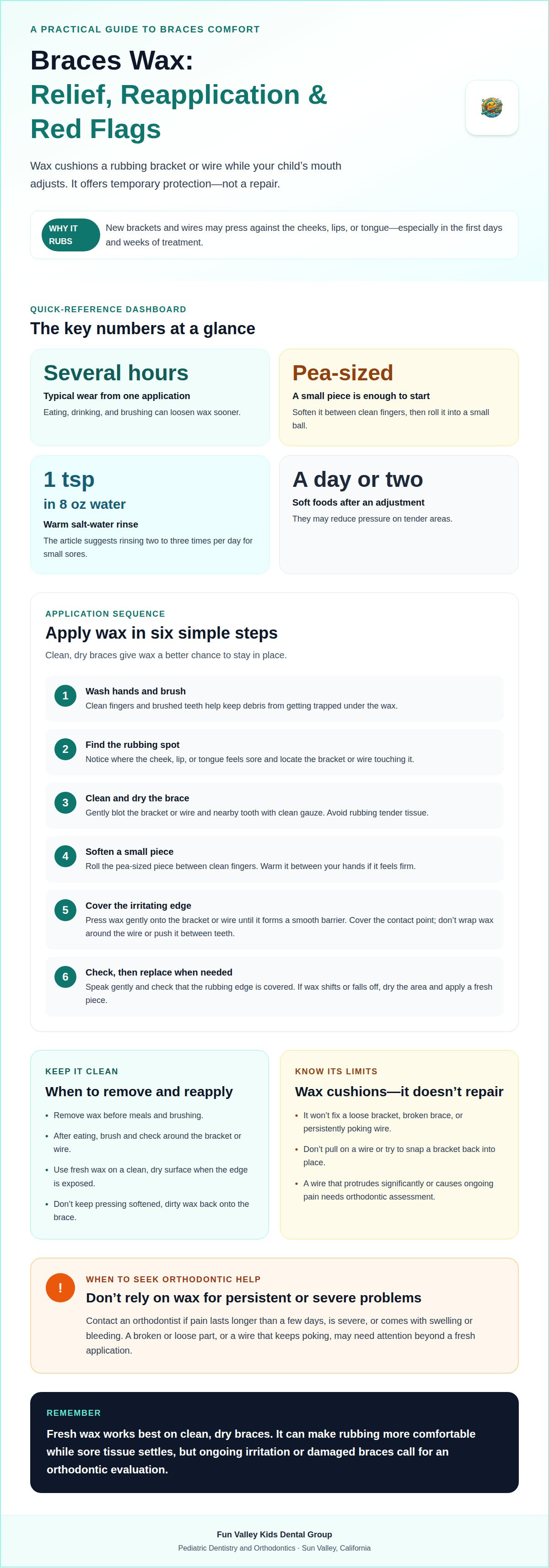
Wax for braces irritation usually provides relief for several hours per application, though eating, drinking, and brushing can loosen it sooner. Remove it before meals and brushing, then apply fresh wax to clean, dry braces as needed. Wax cushions a sore spot, but it won’t fix a loose bracket or broken wire.
That rubbing can feel like the whole problem, but it’s often part of the mouth adjusting to braces. New brackets and wires may press against the cheeks, lips, or tongue, especially during the first days and weeks of treatment.
If your child feels poked or sore, it’s understandable to want quick, simple relief. This guide explains why braces can irritate the mouth, how to prepare and apply wax, how long it may stay in place, and when discomfort calls for an orthodontic evaluation. It also covers what to do if a wire or bracket is causing the irritation, so you and your child can take the next step with greater comfort and confidence.
Table of Contents
How long does orthodontic wax last on braces?
A single application usually lasts several hours, depending on eating, drinking, and brushing. Wax cushions an irritating bracket or wire, but it doesn’t repair a loose bracket or broken brace.
For wax for braces irritation, clean, dry braces help the wax stay in place. Follow these steps to cover the spot causing discomfort.
Wash your hands and brush your teeth. Clean fingers help keep debris away from the wax. Brushing first also clears food around brackets and wires, so you’re not trapping crumbs against the teeth.
Find the rubbing spot. Notice where the cheek, lip, or tongue feels sore, then look for the bracket or wire touching it. If the irritating wire is hard to identify, choose the wire directly across from the sensitive area.
Clean and dry the braces. Wax sticks better to a dry surface than a wet one. Gently dry the bracket or wire and nearby tooth; a piece of sterilized gauze can help reach the area.
Soften a small amount of wax. Break off a piece about the size of a pea, then roll it between clean fingers into a small ball. If it feels firm or won’t stick, warm it between your hands before applying.
Press wax over the irritating edge. Place the ball directly on the bracket or wire causing discomfort. Press it gently until it covers the sharp or rubbing part and forms a smooth barrier between the brace and mouth tissue.
Check that the wax stays put. Speak gently and notice whether the covered spot still rubs. If the wax falls off or the area becomes exposed, dry the brace again and reapply a fresh piece.
Wax offers temporary protection while sore tissue settles. It won’t fix a loose bracket, broken brace, or wire that keeps poking the mouth. Don’t pull on a wire or try to snap a bracket back into place. A wire that protrudes significantly or causes ongoing pain needs assessment by an orthodontic office, not a home adjustment.
Other care may soothe small sores: rinse with warm salt water made with one teaspoon of salt in eight ounces of water, two to three times per day. After an adjustment, choose soft foods for a day or two to reduce pressure on tender areas.
If pain lasts longer than a few days, is severe, or comes with swelling or bleeding, contact an orthodontist. Wax can make braces more comfortable, but persistent irritation may need attention beyond a fresh application.
Preparing braces and wax before application
Set out orthodontic wax, a toothbrush, and clean gauze before starting. Clean, dry surfaces help wax adhere and cushion the braces.
Prepare Wax for Dental AppliancesWash your hands, then pinch off a small piece of orthodontic wax. Roll it between your fingertips until it softens into a smooth ball. Place it over the bracket or wire rubbing your child’s cheek, lip, or tongue. For another dental appliance, cover only the part causing friction and follow the appliance instructions.
Clean Teeth Before ApplicationBrush before applying wax so food and plaque don’t get trapped underneath. Gently brush around brackets, along the gumline, and over the teeth beside the sore spot. Rinse away loose debris, then dry the teeth and appliance. Wax adheres less securely to wet surfaces, so check that saliva hasn’t collected around the bracket.
Dry the target area carefully. Use clean gauze to blot the bracket or wire and nearby tooth. Avoid rubbing a tender spot, which can make already irritated tissues feel more sensitive. If the area becomes wet again, pause and dry it before placing the wax. A dry surface gives the small piece a better chance to stay in place.
Cover the part causing friction. Press the softened wax gently onto the bracket or wire. Flatten its edges so it covers the sharp or rough surface, creating a smooth barrier between the appliance and mouth. Don’t push wax into gaps between teeth or wrap it around a wire. The aim is to cover the point of contact, not adjust the braces.
Check the fit before carrying on. Speak normally and move your lips and tongue gently. If the wax shifts or leaves the rubbing edge exposed, remove it and apply a fresh piece to the clean, dry spot. Don’t add layer after layer over loose wax, since it may come away unevenly and offer less protection.
Plan for the wax to wear away. One application usually lasts several hours, though eating, drinking, and brushing can loosen it sooner. Reapply when the covered edge becomes exposed, using fresh wax on a clean, dry surface. Frequent rubbing or a sore spot that continues near an orthodontic appliance can also be discussed at an orthodontic appointment.
Wax is a temporary cushion, not a repair for a broken or loose brace. If the same wire keeps rubbing after each application, note its location and mention it at the appointment.
How Long Can You Wear Orthodontic Wax?
Orthodontic wax is temporary protection, not a set-it-and-forget-it fix. Use these steps to keep it clean and know when to replace it.
Expect an application to last several hours. Eating, drinking, and brushing can loosen wax sooner, so check whether it still covers the irritating edge. If the bracket or wire becomes exposed, remove the loose wax and apply a fresh piece. Don’t keep pressing softened, dirty wax back onto the brace.
Remove wax before meals. Take it off before eating, especially if food could pull it away or become trapped around the appliance. Some people find eating with wax uncomfortable, while others find it acceptable. Removing it first makes it easier to keep the covered area clean and notice whether the brace is still rubbing.
Clean the area after eating. Brush your teeth and braces, then check for food around the bracket or wire. Dry the surface before adding fresh wax, because moisture can make it harder for the wax to adhere. If the original piece has fallen out during a meal, don’t reuse it; start with a clean piece.
Take wax off before brushing or flossing. Removing it lets you clean the teeth and appliance without brushing over a layer that may collect debris. After oral care, use clean fingers to place fresh wax on the dry spot if friction continues. Avoid covering the bracket with old wax just to save time.
Replace the wax daily. Even if a piece still seems to cover the rubbing spot, discard it and use fresh wax each day. During the first week of braces or after a tightening, patients may reapply it two to three times per day. The need can change as wax loosens during normal eating and cleaning.
Use it overnight if irritation persists. Wax can remain in place while sleeping, but remove and replace it daily. If you find you frequently need it overnight, or the same spot keeps hurting, contact the orthodontist to assess the source. Wax cushions mouth tissues; it doesn’t adjust braces or repair a loose bracket.
Think of each application as a short-lived shield. Remove it for meals and oral care, then apply fresh wax to a clean, dry surface if the brace still rubs. Severe or persistent discomfort, swelling, or bleeding calls for an orthodontic appointment rather than repeated reapplication.
Why braces cause mouth irritation
Braces change how the mouth feels as teeth and soft tissues adjust. Look for the source of rubbing, since pressure and a loose wire call for different responses.
Notice when the soreness began. New braces can press on teeth and irritate the mouth during the first few days. Pressure may continue to contribute to irritation during the first few weeks of treatment. After an adjustment, tenderness can return as the teeth respond to pressure. This pattern differs from one sharp spot that repeatedly scrapes a cheek.
Identify which tissue is rubbing. Brackets and wires sit close to the cheeks, lips, and tongue. As the mouth adjusts, those tissues may brush against unfamiliar surfaces during talking or eating. A bracket edge can rub one place, while a wire may touch a longer area. Note whether the sore spot matches a particular part of the appliance.
Look for a loose or detached wire. A wire that has shifted can poke the cheek or tongue, sometimes causing bleeding. This differs from general tenderness after braces are placed or adjusted. Don’t pull on the wire or try to bend it into position. Contact the orthodontist if a wire protrudes significantly or keeps causing pain.
Use wax as a temporary barrier. Orthodontic wax covers the edge touching sensitive tissues and creates a smoother surface. Common ingredients include beeswax, paraffin, and carnauba wax. After locating the rubbing bracket or wire, applying a small piece over that contact point can reduce friction. The wax cushions the tissue; it doesn’t correct the brace or stop tooth pressure.
Keep other sources of discomfort in view. Jaw pain, tooth decay, and allergic reactions can also occur during braces treatment. These concerns aren’t the same as a bracket rubbing the cheek. For example, a sore spot beside one sharp edge suggests friction, while ongoing tooth discomfort needs a different assessment. Don’t assume wax will address every kind of mouth pain.
Track whether the irritation is easing. Note if the sore area improves as the mouth adjusts, or if the same wire continues to poke. Wax can provide short-term cushioning, but repeated irritation may signal a loose or poorly positioned part. Severe or persistent discomfort, swelling, or bleeding warrants contacting the orthodontist. Stop using wax and seek advice if irritation appears after applying it.
The key distinction is the source: ordinary pressure can happen during adjustment, while a sharp, persistent contact point needs attention. Matching the response to the cause helps protect tender cheeks, lips, and tongue without treating wax as a repair.
Can you eat or drink with wax on braces?
Some children find eating with orthodontic wax uncomfortable, while others find it manageable. Use these steps to decide what to do around meals and drinks.
Remove wax before eating when possible. Food can tug at a wax covering or press it against the bracket. Taking it off first also makes it easier to clean around the appliance afterward. If your child prefers keeping it on for comfort, pay attention to whether chewing shifts the wax or makes the rubbing feel worse.
Check the rubbing spot after a meal. Look at the bracket or wire that was covered and see whether the wax remains in place. If it has moved, loosened, or collected food, remove it rather than pressing it back onto the brace. Clean the teeth and appliance before applying a fresh piece.
Expect drinks to affect the covering. Drinking can loosen an application, so check whether the wax still covers the sharp edge afterward. If it has come away, don’t reuse it. Dry the area and apply a clean piece only if the bracket or wire continues to rub.
Know what accidental swallowing means. Orthodontic wax is made from non-toxic materials, and accidentally swallowing a small amount is generally not harmful. A piece may come loose while eating or drinking. If that happens, remove any remaining wax that has shifted and inspect the area before deciding whether fresh wax is needed.
Keep the meal comfortable and the appliance clean. If wax makes chewing awkward, take it off before eating rather than repeatedly adjusting it with your tongue. Afterward, brush around the brackets and wires, rinse away food, and dry the sore spot. Clean teeth and a dry brace help a new application stay in place.
Respond to repeated problems, not just lost wax. If the same bracket or wire keeps catching food or rubbing after meals, note its location and how often it happens. Wax offers a temporary cushion, but it won’t repair a loose bracket or broken wire. Don’t pull or bend a wire at home; contact an orthodontist when a brace part is damaged or keeps poking.
Wax can stay on during a drink or meal if it feels comfortable, but eating may dislodge it and make chewing unpleasant. For recurring irritation around braces, schedule an orthodontic appointment to have the source assessed.
Fun Valley Kids Dental Group: Traditional Braces
Fun Valley Kids Dental Group provides traditional braces and orthodontic evaluations for children and teens. If a wire keeps poking, a bracket feels loose, or irritation returns despite careful wax use, an orthodontic evaluation can help identify the source. Braces recommendations depend on the patient’s bite, tooth position, dental development, and clinical needs.
Regular dental care also matters during orthodontic treatment. Pediatric dental exams and cleanings help support oral health while braces are in place. At an appointment, share where the rubbing occurs, how long it has bothered your child, and whether you’ve noticed swelling or bleeding. These details help the team understand the issue and discuss appropriate next steps.
Contact Fun Valley Kids Dental Group in Sun Valley, California, to schedule a pediatric dental or orthodontic appointment.
Help Your Child Feel Ready for the Next Step
Braces can make children more aware of how their mouth feels. Help your child describe the exact spot that rubs, what movement makes it worse, and whether the discomfort keeps returning. These details can make conversations about orthodontic care clearer and help your child feel involved in treatment.
A thoughtful routine also includes care beyond the braces themselves. Pediatric Dental Exams, Dental Cleanings, and Fluoride Treatments support children’s oral health as they grow. Knowing how to use wax for braces irritation is one useful tool; noticing when your child needs more support is another.
If your child’s braces are causing ongoing discomfort or you’d like to discuss their dental care, contact Fun Valley Kids Dental Group. With a clear plan and caring guidance, your child can keep moving forward with confidence.
Frequently Asked Questions
Is orthodontic wax safe to swallow accidentally?
Accidentally swallowing a small amount of orthodontic wax is generally not harmful because it’s made from non-toxic materials. If a piece comes loose while your child is talking or eating, there’s usually no need to panic. Remove any remaining loose wax, then check whether the brace still needs covering. If your child develops irritation after applying wax, stop using it and consult an orthodontist.
What Is Orthodontic Wax and How Does It Help?
Orthodontic wax is a soft covering placed over a part of the braces that rubs the mouth. It may contain materials such as paraffin, beeswax, or carnauba wax. For example, a small piece over a bracket can create a smoother surface against the cheek. Wax doesn’t change tooth movement or repair braces. Its role is to reduce friction while the mouth adjusts.
Can You Sleep With Braces Wax?
Yes, orthodontic wax can be worn overnight if a bracket or wire rubs while your child sleeps. Before bedtime, check that the wax is secure and covers only the irritating part of the braces. Replace it the next day as part of keeping the braces clean. If your child frequently needs wax overnight, contact the orthodontist to assess the source of the irritation.
How Long Does Dental Wax Last?
A single application usually lasts several hours, but meals, drinks, and brushing can loosen it sooner. For example, wax applied before school may shift during lunch, so check the covered spot afterward. Replace it if the rubbing edge becomes exposed. Wear time depends more on activity and how securely the wax adheres than on a fixed schedule.
How is Orthodontic Wax applied?
Wash your hands, brush your teeth, and dry the braces before applying wax. Pinch off a small piece, soften it between your fingers, and roll it into a ball. Gently press it onto the bracket or wire that rubs, then smooth the edges over the contact point. If you can’t identify the irritating wire, cover the brace part directly across from the sore area.
How long does it take for braces irritation to go away?
Braces-related soreness often improves as the mouth adjusts, with many patients noticing improvement within a few weeks. Tenderness can be strongest during the first few days after treatment starts or after an adjustment. A wire that keeps poking, however, can continue irritating the same spot. Contact an orthodontist for discomfort that persists, becomes severe, or comes with swelling or bleeding.
How often should I replace dental wax?
Replace orthodontic wax daily, and use a fresh piece if the current one loosens or becomes dirty. Remove it before brushing or flossing so oral care can reach around brackets and wires. After brushing, for example, dry the rubbing spot before applying fresh wax. If it repeatedly falls off the same brace part, don’t keep layering it; have the source of friction assessed.
How does orthodontic wax relieve irritation from braces?
Orthodontic wax covers a rough or sharp brace surface, creating a smoother barrier between the braces and the cheeks, lips, or tongue. This cushioning reduces direct rubbing while sensitive tissues settle. For example, covering one bracket may protect a sore cheek during speech. Wax provides temporary relief only. It won’t correct a detached wire, loose bracket, or another source of persistent discomfort.



Comments