


Orthodontics for Jaw Alignment in Kids in North Hollywood

Orthodontic treatment length is shaped by jaw growth, bite pattern, tooth position, and whether care happens in one or two phases. For children using a two-phase approach, treatment may start as early as age seven, and Phase 2 might last about one to three years, according to CDC Dental Center. For families exploring orthodontics for jaw alignment in kids in North Hollywood, an initial orthodontic evaluation by about age seven is recommended by the American Association of Orthodontists.
It’s natural to wonder whether a child’s bite needs attention now or may change as they grow. Clues can include more than crooked teeth: jaw development, dental habits, and how the upper and lower teeth meet all help shape the picture. This guide explains how an orthodontist assesses growth and bite relationships, what can contribute to alignment concerns, and how options such as braces or clear aligners may help. You’ll also learn what influences treatment timing, so you can feel prepared for the next step in your child’s smile journey.
Table of Contents
Assessing jaw growth and bite relationships
An orthodontic assessment looks at how a child’s upper and lower jaws grow, how teeth meet, and whether those relationships affect function. The changing mouth between ages six and 10 makes growth and developing bite relationships useful parts of the picture.
Jaw Discrepancies and Bite Problems
A jaw discrepancy means the upper and lower jaws may not align comfortably when a child closes their mouth. The bite may show an overbite, underbite, crossbite, or open bite, where some upper and lower teeth do not meet. These terms describe how the teeth fit together. An orthodontist also considers jaw growth and tooth position before discussing treatment.
According to CDC Dental Center, a child’s mouth changes significantly between ages six and 10 as baby teeth are lost and the jaws develop. During an assessment, the orthodontist examines the bite and facial profile, then considers dental development. For example, a child’s bite may look different as adult teeth emerge, so one observation does not explain the whole pattern.
Crowding and Bite Alignment
Crowding happens when teeth overlap or lack room to line up. It can affect how the upper and lower teeth meet, but crowded teeth alone do not show whether the jaws are misaligned. An orthodontic assessment considers both tooth position and how the bite fits together. This helps clarify the concern being evaluated.
When comparing North Hollywood orthodontic care for a child’s jaw alignment, look for an evaluation that considers jaw growth, tooth position, and bite relationships together. Ask how the findings shape the treatment plan and how the explanation relates to your child’s dental development. This keeps the discussion focused on your child’s needs, not appearance alone.
Signs That Warrant an Evaluation
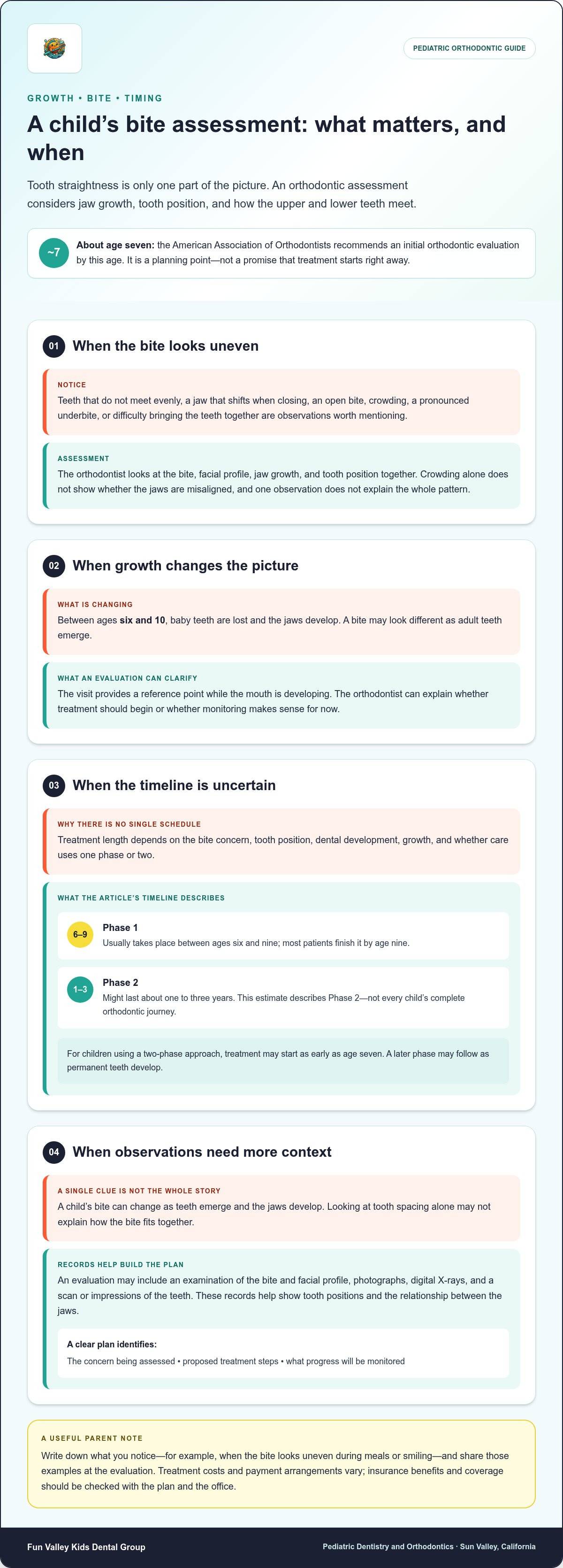
Consider an orthodontic evaluation if your child’s upper and lower teeth do not meet evenly, the jaw appears to shift when closing, or an open bite remains visible. Crowding, a pronounced underbite, or difficulty bringing the teeth together are also worth mentioning. An orthodontist can assess how these observations relate to jaw growth and bite alignment.
The American Association of Orthodontists recommends an initial orthodontic evaluation by about age seven. That visit can establish a reference point while a child’s mouth is developing. The orthodontist may examine the teeth and facial profile, photograph them, take digital X-rays, and scan or make impressions of the teeth. Parents can bring examples, such as when the bite looks uneven during meals or smiling, to make the discussion more specific.
For orthodontics for jaw alignment in kids in North Hollywood, the evaluation should connect your concerns with your child’s growth and bite, not just tooth straightness. Write down what you notice, such as a jaw shift when closing or teeth that do not meet, and bring those examples to the appointment. They give the orthodontist a useful starting point for assessing jaw position, developing teeth, and oral health.
How long does orthodontic treatment last?
There isn’t one timeline for every child. Treatment length depends on the bite concern, tooth position, dental development, and whether care uses one phase or two. According to CDC Dental Center, Phase 2 treatment might last about one to three years. That figure describes Phase 2, not every child’s complete orthodontic journey.
For children using a two-phase approach, the CDC Dental Center says treatment may start as early as age seven. Phase 1 usually takes place between ages six and nine, and most patients finish it by age nine. A later phase may follow as permanent teeth develop. Some children need monitoring rather than immediate treatment, while others may benefit from an earlier step.
The American Association of Orthodontists recommends an initial orthodontic evaluation by about age seven. At this visit, the orthodontist can examine the bite and dental development, then explain whether treatment should begin or observation makes sense. The evaluation is a planning point, not a promise that braces will start immediately. Families can use it to understand what changes to watch as the child grows.
An orthodontic evaluation may include photographs of the teeth and facial profile, digital X-rays, and a scan or impressions. These records help show tooth positions and the relationship between the jaws. The orthodontist can use the findings to plan treatment before discussing appliances. A clear plan identifies the concern, proposed steps, and what progress will be monitored.
Surgery is a separate consideration for significant jaw discrepancies. Orthognathic surgery, performed by an oral and maxillofacial surgeon, repositions the upper jaw, lower jaw, or both. Treatment usually begins after jaw growth is complete, typically during the late teen or adult years. Braces or clear aligners may be used before and after surgery to help the teeth fit together.
Orthodontic costs and payment arrangements vary. To understand affordability, review the proposed treatment stages and your insurance benefits rather than viewing treatment as one step. Coverage and eligibility depend on the plan, so don’t assume jaw-alignment care is fully covered. Fun Valley Kids Dental accepts Medi-Cal/Denti-Cal and all PPO insurances.
Orthodontic risks depend on the planned tooth movement, appliance, dental development, and oral health. The evaluation should explain the concerns relevant to the child and how progress will be monitored. A parent can ask how the plan addresses the bite and what changes require follow-up. For a child with alignment concerns, an orthodontic evaluation can clarify the proposed timeline and next steps.
Expanders, partial braces, and habit-control appliances
Orthodontic appliances serve different purposes: some hold space, while others move teeth or address specific bite patterns. The right option depends on your child’s dental development and the alignment concern being treated.
Expanders and Partial Braces
An expander applies gentle pressure to widen the upper dental arch when an orthodontist identifies a need for more room or a change in its shape. Partial braces attach brackets and wires to selected teeth to address a specific alignment concern. Ask which teeth the appliance will affect and how the proposed movement relates to your child’s bite.
A space maintainer has a different purpose: it holds room when a baby tooth is lost early, helping preserve space for a permanent tooth. It does not straighten teeth like braces. Habit-control appliances may help address patterns such as persistent thumb sucking, which can affect how teeth meet. The orthodontist considers your child’s habit, bite, and development before recommending an appliance.
Headgear and Braces
Traditional braces use brackets and wires and can address a range of orthodontic needs. Clear ceramic braces use tooth-colored brackets, while headgear is a separate appliance that may be included in a plan addressing tooth or jaw relationships. These options are not interchangeable. Ask which concern each appliance targets and whether the plan considers the upper and lower teeth together.
Phase 2 braces may follow an earlier phase when a child’s developing teeth and bite need further alignment. The orthodontist’s plan should explain how this stage builds on earlier care, rather than treating “Phase 2” as a one-size-fits-all prescription. Appliance selection depends on the bite, tooth position, and dental development.
Chewing can offer clues about how the teeth meet, but it cannot diagnose the cause. Your child may mention food catching between certain teeth, or you may notice the upper and lower teeth meeting unevenly. Share these observations during an evaluation so the orthodontist can compare them with the bite and tooth positions.
Retainers are used after braces or clear aligner treatment to help maintain alignment and reduce shifting once active tooth movement ends. The orthodontist explains how a retainer fits into your child’s plan. Ask when it should be worn and how it helps maintain the results of treatment.
Before choosing an expander, partial braces, or another appliance, ask about the treatment goal, the teeth or jaw area involved, and how progress will be assessed. A clear explanation connects each device to a specific concern, such as limited space, a developing bite pattern, or maintaining room after early tooth loss. This makes the plan easier to understand and follow.
Causes of childhood orthodontic problems
Childhood bite concerns can have several contributing factors. Genetics may influence jaw size, tooth size, or how the upper and lower jaws relate. For example, a smaller jaw and larger teeth may leave limited room as adult teeth emerge. An orthodontist assesses these features together before recommending treatment.
Growth patterns matter, too. A child’s upper jaw, lower jaw, and teeth may develop at different rates. When the jaws grow at different rates, their relationship may contribute to an underbite, overbite, or crossbite. These terms describe how the teeth meet, not why the pattern developed. An evaluation considers jaw position, facial profile, and dental development to understand the concern.
Tooth size and available space can contribute to crowding. Permanent teeth may appear rotated or overlap when the dental arch has limited room. Crowding can also become noticeable as baby teeth loosen and adult teeth emerge. The timing and direction of eruption offer useful clues, but crowded teeth alone do not identify a jaw-growth problem.
Losing a baby tooth early can affect the space available for its permanent successor. Nearby teeth may drift toward the gap, reducing the room left for the incoming tooth. A space maintainer may be considered when preserving that space is part of the plan. The dentist or orthodontist assesses which tooth was lost, where it was, and how nearby teeth are positioned.
Some oral habits can influence tooth position or bite development, especially if they continue as a child grows. Examples include persistent thumb sucking or tongue pressure against the front teeth. The habit’s pattern, duration, and effect on the bite matter more than noticing it once. Share what you have observed, including when it happens, so the evaluation can consider it accurately.
These influences can overlap. A child might inherit crowding and also have a habit that puts pressure on the front teeth; neither detail alone explains the whole bite. An orthodontist builds a plan by examining jaw relationships, tooth positions, dental development, and relevant habits. This helps distinguish a pattern to monitor from one that may benefit from treatment.
Prepare for an evaluation by noting when the concern first appeared, which teeth seem affected, and whether the bite looks different during chewing. Bring these observations and any known family history of jaw or tooth alignment concerns. They give the orthodontist a clearer starting point for identifying contributing factors and explaining next steps.
Which North Hollywood orthodontists treat jaw alignment problems in children?
Children with jaw alignment concerns need an orthodontic evaluation focused on developing teeth, jaw relationships, and bite function. In North Hollywood, choose a pediatric orthodontic assessment that explains how each finding relates to the proposed plan. A crooked front tooth and a jaw that shifts when closing are different concerns, so the assessment should consider more than appearance.
During an orthodontic evaluation, the orthodontist examines the bite, tooth positions, and facial profile. Photographs, low-exposure digital X-rays, and a scan or impressions can help document the findings. Ask what each step shows. Bite analysis, for example, helps explain how the upper and lower teeth meet, while images record tooth and jaw relationships.
A useful consultation connects the examination to a clear plan. You should leave understanding which alignment concern the orthodontist identified, which options relate to it, and how progress will be assessed. If monitoring is recommended instead of starting treatment, ask what changes to watch, such as how permanent teeth emerge or how the bite fits together.
To compare providers, use the same questions at each consultation:
Does the evaluation address jaw growth, bite relationships, and tooth position?
What does each photograph, X-ray, or scan contribute to the assessment?
Which appliance or treatment step addresses the specific concern?
How will the orthodontist track changes as the child’s teeth develop?
What should prompt a follow-up before the next planned visit?
Clear explanations matter. If your child has an open bite, ask whether the plan focuses on tooth position, jaw relationships, or both. If crowding is the main concern, ask how the orthodontist distinguishes limited space from a jaw alignment issue. These questions help you understand the reasoning behind a recommendation without treating every visible difference as the same problem.
North Hollywood families can also consider whether the appointment feels clear and comfortable for both parent and child. Your child should have room to ask what an appliance does, while you receive a practical explanation of the steps. Notice whether the orthodontist describes the goal in everyday language, such as improving how the teeth meet, rather than relying only on technical terms.
Bring a short list of observations, such as a jaw shift when closing or teeth that do not meet evenly during chewing. Pairing these examples with questions about imaging, treatment goals, and monitoring makes the consultation more useful. A clear orthodontic assessment helps your family understand your child’s alignment needs and the reasoning behind the next step.
Choose a North Hollywood orthodontist who treats children and assesses jaw growth, bite relationships, and tooth position. The provider should explain how the findings shape the treatment plan and how changes will be monitored.
Fun Valley Kids Dental Group: Pediatric Dental Exams
Fun Valley Kids Dental Group provides pediatric dental exams to help families keep track of a child’s oral health. During a routine exam, you can discuss changes you have noticed, such as crowding or a bite that looks different as adult teeth emerge. A dental exam supports ongoing care, while an orthodontic evaluation specifically assesses jaw and bite alignment.
Families in North Hollywood can visit Fun Valley Kids Dental Group in Sun Valley for children’s dental care. Cleanings, fluoride treatments, and dental sealants can also support preventive care when appropriate for your child. Recommendations are tailored to each child’s needs.
To discuss your child’s dental care, contact Fun Valley Kids Dental Group in Sun Valley.
Take the Next Step With Confidence
An orthodontic visit can turn uncertainty into a clearer plan. Before the appointment, ask your child what they would like to understand and bring those questions along. A simple prompt such as “What would you like to know about your smile?” helps your child take part in the conversation and feel included in decisions about their care.
If you’re exploring orthodontics for jaw alignment in kids in North Hollywood, take a manageable next step: arrange an evaluation, share your concerns, and ask how the proposed care may fit your child’s daily routine. You do not need to have every answer beforehand. A thoughtful conversation can help your family see the way forward.
Fun Valley Kids Dental Group welcomes families at its Sun Valley office. Contact Fun Valley Kids Dental Group to discuss your child’s dental or orthodontic care. Your child’s smile journey can begin with a calm, encouraging conversation.
Frequently Asked Questions
What is Phase 1 orthodontics?
Phase 1 orthodontics is an early treatment stage that addresses selected alignment or bite concerns while a child is growing. According to CDC Dental Center, it usually takes place between ages six and nine. It doesn’t automatically mean a child will need braces right away or later. The orthodontist explains which concern the phase targets, what changes to watch, and whether another stage may be considered as permanent teeth come in.
How can I find out if my child needs braces?
An orthodontic evaluation can determine whether braces suit your child’s bite and dental development. Note specific patterns, such as overlapping teeth, a bite that looks uneven in family photos, or difficulty bringing the teeth together comfortably. Bring these observations to the appointment. The orthodontist can explain whether braces, another approach, monitoring, or no treatment is appropriate now.
At what age should children see an orthodontist for jaw alignment?
The American Association of Orthodontists recommends an initial orthodontic evaluation by about age seven. This gives families a chance to discuss developing jaw relationships before all permanent teeth have appeared. The visit doesn’t necessarily lead to immediate treatment. For example, the orthodontist may explain which changes to watch as a child’s teeth emerge and when a later evaluation would help clarify the plan.
What treatments correct jaw alignment in children, such as expanders or braces?
Possible approaches include expanders, traditional braces, or clear aligners, selected for the child’s bite, tooth positions, and dental development. Traditional braces use brackets and wires; clear aligner systems use removable, transparent trays to straighten teeth. An expander is a different appliance, so ask what concern it would address. The treatment plan should explain the purpose of each device and how the orthodontist will assess progress.
How do orthodontists diagnose jaw alignment problems in children?
Orthodontists assess jaw alignment by examining how the teeth meet, tooth positions, and the facial profile. The evaluation may also include photographs, low-exposure digital X-rays, and a scan or impressions of the teeth. Together, these records help the orthodontist map the bite and discuss possible treatment steps. You can help by describing a specific change you have noticed, such as a jaw that appears shifted when your child closes their mouth.
How long does jaw alignment treatment take for children?
Timing depends on the concern being treated, the child’s dental development, and whether care involves one phase or more. According to CDC Dental Center, Phase 2 orthodontic treatment might last about one to three years. That estimate refers to Phase 2, not every child’s full treatment. Ask the orthodontist to distinguish active appliance treatment from any observation period, so the proposed timeline is easier to understand.


Comments