


Pacoima Tooth Extraction for Kids Cost and Price Factors

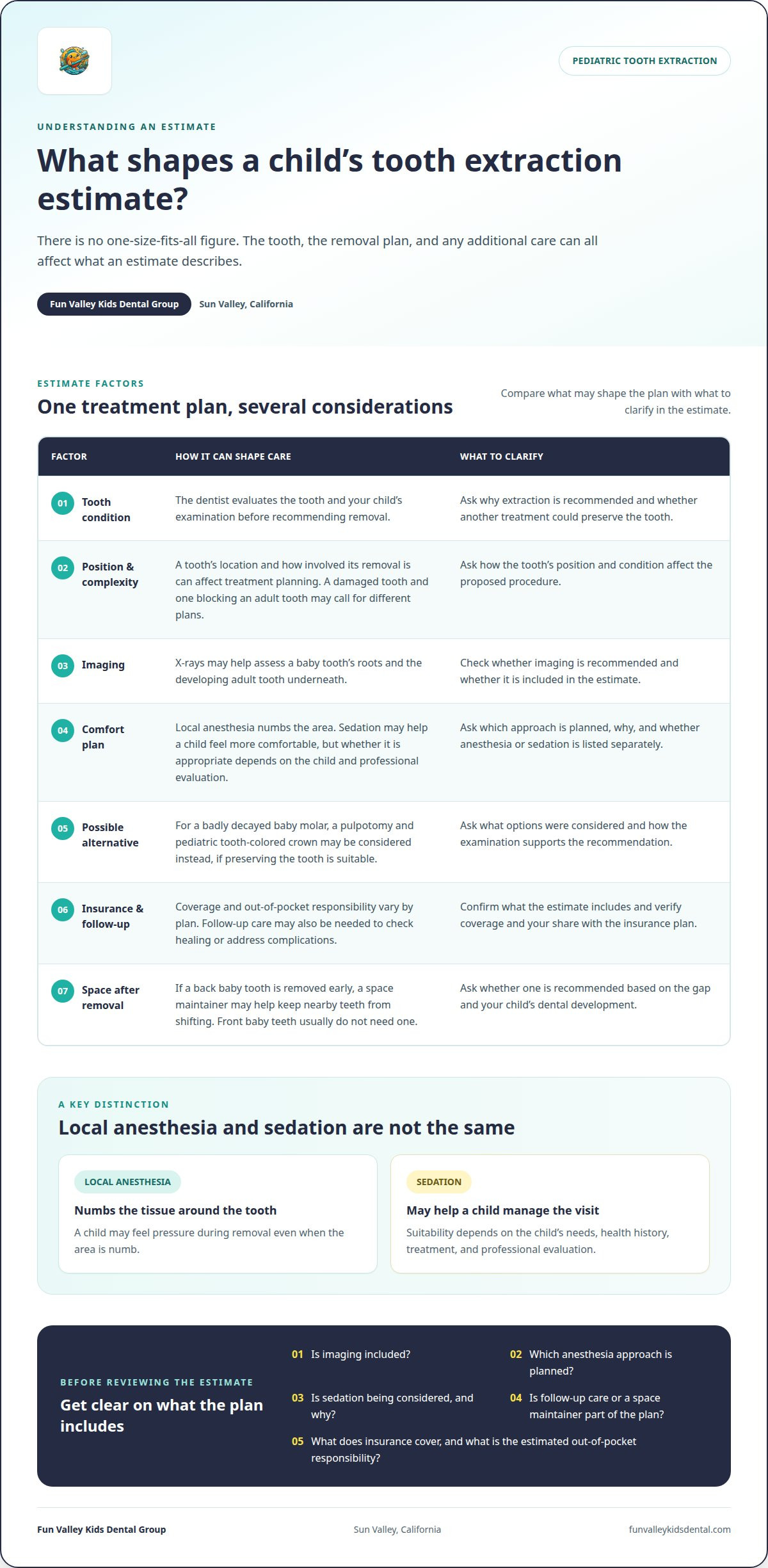
What shapes the cost of a tooth extraction for kids in Pacoima? It depends on the tooth’s condition and position, how complex the removal is, and whether imaging or sedation is part of the treatment plan. A clear estimate starts with understanding what your child needs, not with a one-size-fits-all figure.
It’s natural to want a straightforward number before your child’s visit. The total can also depend on insurance coverage and whether another treatment could preserve the tooth. If a back baby tooth is removed early, a space maintainer may be recommended to help keep nearby teeth from shifting.
This guide explains the main factors that shape an estimate, how insurance may affect your share, and what details to ask about. You’ll also learn how a pediatric dental exam can clarify whether extraction is appropriate and what care may follow, helping you plan the next step with greater confidence.
Table of Contents
Anesthesia and sedation
Local anesthesia numbs the area around a tooth before removal. Sedation options depend on your child’s needs and professional evaluation.
Anesthesia for Pediatric Extractions
Local anesthesia numbs the tissue around the tooth being removed. With the area numb, a child may feel pressure rather than pain during a baby tooth extraction. The dentist considers the tooth and your child’s examination when planning care. When reviewing an estimate, ask which anesthesia approach it describes and whether it is separate from other planned services.
Sedation During Tooth Removal
Sedation can help a child feel more comfortable during dental treatment. Whether sedation is appropriate depends on your child’s needs, health history, treatment, and professional evaluation. Share relevant health information and your child’s concerns with the dental team so they can discuss the plan.
Local anesthesia and sedation serve different purposes. Anesthesia numbs the tissue around the tooth, while sedation may help a child manage the visit. A child may still notice pressure during removal even when the area is numb. Explaining this beforehand can give a young patient a clearer picture of what to expect.
The treatment plan also matters. A straightforward baby tooth removal and a more involved procedure may call for different planning. The dental team considers the child’s age, dental development, health history, anxiety, and the tooth’s condition. An infection or other complication may affect the clinical approach, so the dentist evaluates the full situation before recommending anesthesia or sedation.
Before treatment, parents can ask for a clear explanation of the plan. Useful questions include:
Which part of the mouth will be numbed?
Is sedation being considered, and why?
How does the child’s health history affect the plan?
Which anesthesia or sedation items appear in the estimate?
These questions help clarify the cost factors in a Pacoima estimate without assuming every child needs the same approach. A nervous child may need a different comfort discussion from one who feels at ease. Recommendations should reflect the child’s clinical needs, not a standard add-on for every extraction.
The key distinction is simple: local anesthesia numbs the extraction area, while sedation may help a child feel more comfortable. Discussing both during the visit can clarify the proposed care and its role in the estimate. The dentist considers your child’s examination, health history, and treatment needs when planning.
Extraction procedure and aftercare
A pediatric extraction plan may include imaging, removal, and instructions for home care. Understanding each step helps parents see what the estimate covers and what their child may need afterward.
How the Tooth Is Removed
A tooth extraction removes a tooth after the dentist evaluates its condition and position. Before removing a baby tooth, the dentist may use X-rays to assess its roots and the developing adult tooth underneath. This helps plan around your child’s changing smile and explain why removal is recommended. A damaged tooth and one blocking an adult tooth, for example, may call for different planning.
The tooth’s location can affect what follows. If a back baby tooth is removed early, a space maintainer may help prevent neighboring teeth from drifting into the gap. Front baby teeth usually do not need one. The dentist considers the gap and your child’s dental development when discussing whether this appliance belongs in the plan.
Extraction is not the only possible plan for a badly decayed baby molar. A pulpotomy and pediatric tooth-colored crown may be considered instead. Your child’s examination helps determine whether preserving the tooth is suitable. Ask how the dentist reached the recommendation and whether the estimate includes imaging or follow-up care.
Care Following the Extraction
Aftercare means protecting the extraction site while it heals. A blood clot forms within 24 hours after extraction, so children should avoid straws, spitting, or hard rinsing during the first day. These simple precautions help protect the site. The dentist’s written instructions can also guide parents on food, activity, and any prescribed medications.
For the first 24 hours, children should avoid hot foods and drinks. The research also advises avoiding solid foods for at least 48 hours after extraction. Choose foods that fit the dentist’s instructions and your child’s comfort, and keep drinks straw-free during the first day. Follow the specific instructions provided for the procedure.
Keep gauze in place by having your child bite down for at least 30 minutes.
Use a cold compress intermittently for 10 minutes to help reduce swelling.
Expect swelling to begin subsiding after 2 to 3 days.
Bleeding during the first 24-48 hours is described as normal after an extraction. Swelling is greatest during the first 72 hours; it should completely go away 10 days after tooth extraction surgery. Bruising should completely go away 2 weeks after the operation. Stitches begin to dissolve after a week. Contact the dental team about concerns or changes in your child’s healing.
Some children need a follow-up visit to check healing or address complications. If a back baby tooth was removed, ask how the space will be monitored and whether a space maintainer is part of the plan. A pediatric dental exam can help clarify the next steps for your child’s care.
Geographic and dentist experience price differences
Location and a dentist’s experience can shape how an extraction estimate is structured. For Pacoima families, the useful comparison is the care included, not a city name alone.
Location-Based Price Differences
Local practice conditions can affect estimates, but location alone does not explain the total. A Pacoima estimate may differ from one elsewhere because offices operate in different markets. Compare the specific services listed, including the removal, imaging, and follow-up details, rather than assuming nearby addresses offer identical care.
Keep the place of treatment clear. Pacoima is the community you’re searching from, while Fun Valley Kids Dental Group’s office is in Sun Valley, another San Fernando Valley community. Travel distance and treatment location are separate considerations. Knowing the office address helps you plan the visit, while reviewing the estimate shows which clinical services it covers.
Estimates can also differ in what they include. One written plan may list diagnostic imaging separately, while another may group it with broader treatment. That distinction affects how families read the total, even when the proposed extraction is similar. Ask which items are included, which are separate, and whether the estimate covers the same stages of care.
Dentist Experience and Pricing
A dentist’s experience describes their background caring for patients, but it does not reveal the full scope of an extraction estimate by itself. A pediatric dentist evaluates your child’s age, dental development, tooth position, and health history. Those details help explain the recommended approach. Ask how the examination connects to the treatment plan rather than treating years of practice as a stand-alone measure.
A dentist’s background may be relevant to how they assess a child’s needs, but it does not show whether one estimate includes more care. A baby tooth in a complicated position may require different planning from a loose tooth nearing natural loss. The examination findings, not a general label, explain why a particular removal plan is recommended.
To make an estimate easier to understand, focus on its components:
Clinical basis: Which tooth is involved, and what examination findings support removal?
Planned services: Are imaging and follow-up listed separately or together?
Provider’s explanation: How does the child’s dental development affect the proposed care?
These details make estimates more meaningful without assuming that a neighborhood or experience level determines the final figure. For instance, two Pacoima-area families may receive different plans because their children have different teeth, health histories, or clinical needs. An itemized explanation connects each planned service to the child’s examination and helps parents understand what they are reviewing.
Insurance coverage and payment options
Insurance can reduce a family’s out-of-pocket share, but plan terms shape the result. Understanding coverage and payment choices helps parents plan for a child’s care.
Families near Pacoima can seek urgent pediatric dental care at offices serving nearby San Fernando Valley communities, including Sun Valley. For lower-cost care, start with the child’s dental benefits and ask how the estimate reflects coverage and patient responsibility.
Insurance Coverage for Extractions
Dental insurance coverage describes which extraction services a plan may help pay for and what portion remains the patient’s responsibility. Plans may cover baby tooth extractions, but benefits and out-of-pocket shares vary. That difference matters because two children receiving similar treatment can have different coverage under separate plans. Imaging, sedation, and other services may also have distinct benefit rules.
Before treatment, families can review the proposed procedure alongside their plan details. The estimate should distinguish the extraction from any related services, such as diagnostic imaging or sedation. This makes it easier to see which items the plan may consider and which amounts may remain the family’s responsibility. Coverage is not the same as a final payment amount.
For a useful benefits discussion, have your child’s insurance information and proposed treatment details ready. Ask whether the plan requires authorization, what services are included in the estimate, and how the patient share is calculated. This helps distinguish the dental office’s estimate from the insurer’s benefit decision.
Payment Options and Local Care
Payment options are arrangements that help families manage the amount they owe. Some dental clinics offer payment plans, particularly for families without insurance or with high deductibles. Availability and terms vary, so include any plan arrangement in the estimate discussion rather than assuming it applies automatically.
For an urgent dental concern near Pacoima, Fun Valley Kids Dental Group in nearby Sun Valley provides pediatric emergency dental care. The team can assess your child and explain the next step. The practice accepts Medi-Cal/Denti-Cal and PPO dental insurance plans; eligibility, benefits, and patient responsibility should be verified with the office and your insurance carrier.
Families can organize the conversation around a few practical points:
Ask which extraction-related services appear in the estimate.
Ask how the plan’s benefits affect the expected patient share.
Ask whether an available payment arrangement applies to the remaining balance.
Ask how urgent evaluation and planned treatment are reflected separately.
For example, if an estimate includes an extraction and imaging, separate line items can help clarify how each service is handled. If a child has a high deductible, the family’s share may differ from a plan with different benefits. A clear breakdown gives parents a better basis for planning without treating insurance as a guarantee of full payment.
Extraction planning and estimates
A useful estimate connects the proposed extraction to your child’s examination and planned care. Its details can help you understand what happens before treatment and during healing.
Planning a Tooth Extraction
Extraction planning is the clinical review that determines whether and how a child’s tooth should be removed. A dentist considers the tooth’s condition, position, roots, and the developing adult tooth beneath it. X-rays commonly help assess these details before a baby tooth extraction. This planning matters because a recommendation should reflect the child’s dental development, not simply the presence of a loose or damaged tooth.
The plan can also account for what the space will mean afterward. Early removal of a back baby tooth, for example, may lead to a discussion about a space maintainer. This appliance helps prevent nearby teeth from drifting into the gap. A front baby tooth usually does not need one, so the tooth’s location can change the discussion and the estimate.
Planning also distinguishes extraction from other possible care. If a baby molar is badly decayed, a pulpotomy and pediatric tooth-colored crown may be alternatives to removal. The dentist considers the examination findings and your child’s needs before recommending an approach. Orthodontic treatment is a separate consideration: the extraction plan should explain whether the gap or tooth position affects your child’s developing bite.
Preparing a Cost Estimate
A cost estimate is a written outline of anticipated services and patient responsibility. It helps families see how the proposed procedure translates into planned care. For a child’s extraction, the estimate may include the removal, diagnostic imaging, and related services. Reviewing those items separately makes it easier to understand what the plan covers.
Ask which imaging is included and whether any follow-up care is listed separately. A periapical X-ray captures one or two teeth, while a panoramic X-ray captures the upper and lower teeth, jaw, and surrounding structures. The imaging type can help clarify what the dentist assessed and why it appears in the plan.
Use these questions to understand the written estimate:
Which tooth and examination findings support the recommended removal?
Does the estimate include imaging, and what type was taken?
Are follow-up visits or a space maintainer listed separately?
Which services relate to the procedure, and which address later healing?
These details help compare estimates by scope rather than by a headline figure. One estimate may list imaging separately, while another groups it with planned care. If a space maintainer is discussed, ask how it relates to the removed tooth and your child’s dental development.
For a child’s examination and a clear discussion of extraction planning, schedule a pediatric dental exam.
Fun Valley Kids Dental Group: Tooth Extractions
Fun Valley Kids Dental Group provides tooth extractions for children when clinically appropriate. A pediatric dental exam helps assess the tooth, your child’s dental development, and whether removal or another approach may fit their needs. The treatment plan can clarify what the estimate includes, such as imaging or follow-up care.
Families near Pacoima can visit Fun Valley Kids Dental Group at its office in Sun Valley, California. During the visit, parents can discuss why extraction is recommended, their child’s comfort, and questions about insurance coverage. Each recommendation is based on the child’s examination and clinical needs.
Contact Fun Valley Kids Dental Group to discuss your child’s dental care.
Take the Next Step With a Clear Plan
If you’re researching the cost of tooth extraction for kids in Pacoima, the next step is understanding what your child’s dental needs call for. A pediatric dental exam can assess the tooth and help the dentist discuss suitable care. If preserving it is possible, the dentist can explain that option, too. The goal is a plan that makes sense for your child, not a decision based on a general estimate alone.
Ongoing care can support your child’s smile after urgent concerns are addressed. Fun Valley Kids Dental Group offers professional dental cleanings and preventive dental care as part of its pediatric services. These visits give families a chance to discuss prevention and build healthy routines.
Bring your questions and any insurance details to the conversation, and take the next step at a pace that feels comfortable for your family. Contact Fun Valley Kids Dental Group to talk about your child’s dental care. A thoughtful plan can help your child move forward with confidence and comfort.
Frequently Asked Questions
How Much Does a Baby Tooth Extraction Cost?
The cost depends on the child’s tooth, the removal’s complexity, and what the treatment plan includes. Imaging or sedation may affect the estimate, while dental insurance can change the family’s share. Fun Valley Kids Dental Group accepts Medi-Cal/Denti-Cal and PPO dental insurance plans. Ask for an estimate that separates the extraction from related services, then review the plan’s benefits to understand how coverage applies.
Are there alternatives to pulling a decayed baby tooth?
Yes. For a badly decayed baby molar, a pulpotomy and pediatric tooth-colored crown may be considered instead of extraction. The dentist assesses the tooth and your child’s dental development before recommending treatment. Preserving a molar may matter because it helps maintain space as adult teeth develop. Ask the dentist to explain the reasons for the proposed option and any alternatives for your child.
Can the extraction happen at the same visit as the exam?
Sometimes, but an exam does not mean the extraction will automatically happen that day. The dentist evaluates the tooth, reviews any needed imaging, and considers your child’s health history and comfort. The treatment plan and appointment schedule also matter. If the findings call for a different approach or more planning, the dentist may discuss another visit rather than proceeding immediately.
Does it hurt, and do comfort options cost extra?
Local anesthesia numbs the area, so children generally feel pressure rather than pain during a baby tooth extraction. Sedation options may be considered based on the child’s needs, health history, treatment, and professional evaluation. Whether a comfort option changes the estimate or insurance share depends on the plan. Ask for the estimate to identify anesthesia and any sedation separately, if included.
What does aftercare involve?
Aftercare means following the dentist’s instructions while the extraction site heals. Help your child avoid straws and spitting during the first day, and use gauze as directed. Choose foods that fit the instructions, and give only medications recommended for your child. Keep the written guidance handy so caregivers follow the same plan. Contact the dental team if you have concerns about healing or your child’s symptoms change.
What if the tooth is infected?
An infected tooth needs prompt dental assessment because infection can affect the treatment plan. Tell the dentist about your child’s symptoms and when they began, and share relevant health information. The examination helps determine whether extraction or another treatment is appropriate. If your child’s condition seems urgent, contact Fun Valley Kids Dental Group for pediatric emergency dental care rather than waiting for a routine appointment. Don’t try to diagnose or treat the infection at home.
Will my child need stitches?
Not every child’s extraction requires stitches; the need depends on the procedure and the dentist’s findings. If stitches are used, follow the care instructions and ask whether they need special attention. Some stitches begin to dissolve after a week. If you notice a loose stitch, contact the dental team for guidance instead of pulling at it. The dentist can explain what to expect for your child.
How much does a child tooth extraction cost in Pacoima, CA?
There isn’t one universal cost for every child’s extraction in Pacoima. The estimate depends on the tooth’s condition and position, the complexity of removal, and whether imaging or sedation is included. Insurance can also affect the patient’s share. Fun Valley Kids Dental Group’s physical office is in Sun Valley, California, and the practice serves families from Pacoima. Request an itemized estimate based on your child’s examination and treatment plan.


Comments