


Palatal Expander: Adjustment Time and What to Expect

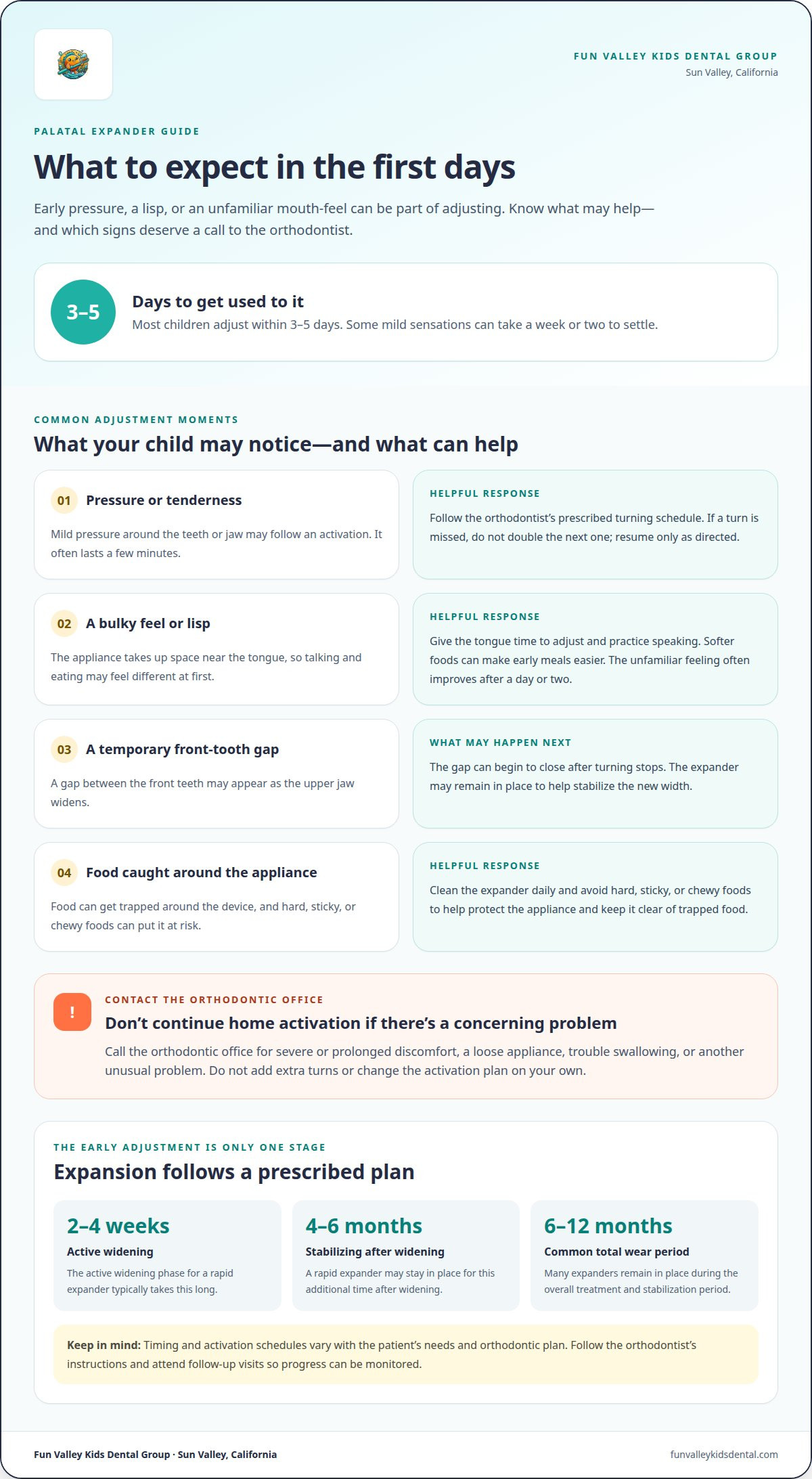
Most children get used to a palatal expander in 3-5 days, though mild pressure, a lisp, or an unfamiliar feeling in the mouth can take a little longer to settle. Knowing what to expect with a palatal expander can make those first days feel less like uncharted territory. A temporary gap between the front teeth may also appear as the upper jaw widens.
It’s natural to wonder whether eating, speaking, and cleaning will feel different at first. A little practice can help your child’s tongue adjust, and softer foods may make mealtimes easier. The active widening phase is only part of treatment; the expander may stay in place afterward to help stabilize the change.
This guide covers common expander types, early sensations, adjustment, daily care, and changes you may notice. It also explains which signs warrant a call to the orthodontist, helping your family approach treatment with more confidence and less guesswork.
Table of Contents
Can a palate expander cause facial changes?
A palatal expander widens the upper jaw, changing the width and fit of the upper arch. It may create room for crowded teeth or help correct a crossbite, where the upper teeth fit inside the lower teeth. Expansion is a planned orthodontic change, not a promise of a dramatic facial transformation.
For a child with a narrow upper jaw, expansion may make room for permanent teeth to emerge and reduce the need for extractions or additional orthodontic work. Unlike braces, which move individual teeth, an expander changes the width of the upper jaw. An orthodontist may recommend expansion before braces if jaw width needs attention first.
Age and device type shape the timeline. Expanders are most effective while a child’s jaw is growing; the typical age range is 7 to 11 years. In most cases, children need two to three months to reach the desired width. Teens and adults may take longer, with results taking up to one year, because the palate becomes less flexible with age. Some adults need a different device or surgically assisted expansion.
Active widening is only one part of treatment. Once the upper jaw reaches its intended width, the expander usually remains in place to stabilize the change. Most expanders stay in a child’s mouth for about 6 to 12 months in total. This holding period gives the widened jaw time to settle before the device is removed.
After the expander is removed, some patients move on to braces or aligners to adjust individual teeth; others may not need further orthodontic treatment. The next step depends on the bite, tooth alignment, and treatment plan. When planning expansion for a growing patient, an orthodontist considers age and skeletal maturity.
In the United States, insurance coverage varies. Many dental plans with orthodontic benefits cover 30% to 50% of a medically necessary expander’s cost, often subject to a lifetime orthodontic maximum. Review the plan’s orthodontic benefits and limits to understand how coverage applies.
Unlike treatment that moves teeth alone, expansion addresses the width of the upper jaw and may create room before braces. For a growing child with a narrow jaw, this can help guide the sequence of orthodontic treatment.
Does a rapid palatal expander hurt?
A palatal expander sits across the roof of the mouth and attaches to the upper back teeth. Its screw gradually widens the upper jaw, creating room when crowding or a narrow bite needs correction.
Appliance placement and home activation
The appliance is bonded to the upper molars with dental adhesive and activated at home with a small key. The orthodontist shows a parent or caregiver how to position the key and follow the prescribed schedule. With a fixed expander, turning the key advances the screw until the next hole appears. Careful positioning makes each activation controlled and clear.
Daily turns and missed activations
Rapid expanders are often turned daily during active widening, but the orthodontist sets the exact schedule and number of turns. A plan may call for one or two activations a day for a few weeks. If you miss a turn, don’t double the next one to catch up. Resume only as directed, because extra turns can add pressure and disrupt the intended pace of treatment.
Some pressure or soreness around the teeth and jaw may follow an activation. Pressure often lasts a few minutes as the screw applies gentle force across the upper arch. Brief tightness is different from severe pain. Contact the orthodontist if discomfort is severe or prolonged, or if an unusual problem develops after treatment begins.
The active widening phase typically takes 2 to 4 weeks. The full course takes longer because the jaw needs time to stabilize after reaching the planned width. A rapid expander may remain in place for an additional four to six months after widening; the orthodontist may leave it in place while the new width settles. Treatment length depends on the patient’s needs and the expansion plan.
Once the target width is reached, the screw usually stops turning, but the appliance stays in place during a retention stage to help stabilize the jaw. Follow-up visits let the orthodontist monitor progress and decide when to remove the device. Braces or aligners may follow if individual teeth still need alignment.
If a child has a loose appliance, severe pain, or trouble swallowing, contact the orthodontic office rather than continuing home activation. For questions about a child’s bite or orthodontic needs, an orthodontic evaluation can help clarify the next step.
First-days adjustment and common sensations
A new expander can make the upper jaw and roof of the mouth feel unfamiliar. Knowing what to expect with a palatal expander can help families distinguish early adjustment from symptoms worth reporting.
Pressure and tenderness
Pressure or mild tenderness around the teeth and jaw may occur as the appliance settles and the upper jaw responds. These sensations can be more noticeable after an adjustment, then ease as your child adapts.
Eating may feel awkward at first because the device takes up space near the tongue. Softer foods can make early meals easier, while practice helps the tongue find comfortable positions for chewing. Mild adjustment sensations often fade within a week, though some children need a week or two.
Initial placement and adjustment
After placement, the expander may feel bulky or strange against the roof of the mouth. That unfamiliar feeling often improves after a day or two. The orthodontist’s instructions explain whether to activate it daily or weekly and how often to turn the device.
Follow the prescribed schedule rather than changing the number of turns based on how the expander feels. Pressure after activation usually lasts a few minutes. If discomfort becomes severe or continues, contact the orthodontist instead of making extra adjustments or stopping the plan without guidance.
Speech changes and side effects
The expander can temporarily affect speech, especially sounds that require the tongue to touch the roof of the mouth. Speaking usually improves within several days as the tongue learns to move around the appliance. Reading aloud or practicing familiar words gives children a low-pressure way to adjust.
A temporary gap between the upper front teeth may appear as the upper jaw widens. It can begin to close after turning stops. The orthodontist can explain how this change fits the treatment plan and what to expect next.
Call the orthodontist if your child has severe pain, prolonged discomfort, a loose or damaged expander, or trouble swallowing. These issues need professional attention, not home adjustments. For everyday care, brush carefully around the appliance and clear food debris from its parts.
Keep a brief note of changes in eating, speech, or comfort. It can help you describe any patterns at the next orthodontic visit.
Cleaning and caring for an expander
Food and plaque can collect around a rapid palatal expander, so clean it thoroughly every day. A simple routine after meals helps keep the appliance clean and the mouth fresh.
Cleaning and oral hygiene
Brush carefully around the appliance after every meal, reaching the upper back teeth and the bands or wires where food can lodge. A water flosser and a rinse after eating can help dislodge trapped particles, especially beneath the expander’s central area.
Make cleaning a shared routine. An adult can check the device after a child brushes, especially during the first days. If you see food left behind, rinse and clean that spot again. Regular, careful brushing supports oral hygiene while the expander is in place.
Food precautions and dietary care
Choose softer foods if chewing feels awkward, and avoid hard, sticky, or chewy foods that could damage or dislodge the appliance. Sticky candy, for example, may cling to the device, while crunchy foods can put pressure on its parts.
After meals, rinse to loosen food, then brush around the expander. If a piece remains trapped, a water flosser may help clear it. Don’t poke the appliance with sharp objects, which can damage the device or affect its fit.
Cleaning and follow-up care
Home care goes hand in hand with orthodontic follow-up visits, where the orthodontist monitors expansion and checks that the appliance is working as planned. Keep scheduled visits even if the device feels normal; its progress and fit still need review.
Contact the orthodontist promptly if the expander becomes loose or damaged rather than waiting for the next check-in. A broken or shifting part can interfere with treatment and make cleaning harder. If food repeatedly collects in one area, mention it at the next visit so the orthodontist can assess the appliance.
Keep up the routine throughout treatment: brush after meals, rinse away debris, and avoid foods that can catch on or strain the device. After removal, continue brushing carefully as alignment treatment progresses. Cleaning needs may change at each stage, so follow the instructions for your child’s current appliance.
Choose softer foods if chewing is uncomfortable, and avoid hard, sticky, chewy, or crunchy foods that can damage the appliance or trap food. Brush after every meal. At regular visits, the orthodontist monitors progress and adjusts the expander as needed. Report damage to the orthodontic office right away.
Common types of palate expanders
Palatal expanders vary in how they sit in the mouth and where they apply pressure. The right design depends on jaw development, the bite, and treatment needs, not simply age or preference.
A common fixed design sits across the roof of the mouth and attaches to the upper back teeth. With a rapid palatal expander, the orthodontist may prescribe turning a central screw with a key to widen the upper jaw. Because the device stays in place, your child doesn’t need to remember to put it in each day, but careful cleaning around it is important.
A removable expander is another option. Your child takes it out and puts it back in according to the orthodontist’s instructions. Following the prescribed wearing schedule matters, since inconsistent wear can interfere with the treatment plan. The removable design may make brushing easier, but the appliance still needs regular cleaning and safe storage when it’s out.
Some expanders are supported by mini dental implants rather than the teeth. An implant-supported device applies force to four mini dental implants and may be recommended when the jaw is more developed. This differs from a tooth-supported expander, so an orthodontic consultation helps determine which approach suits the patient’s development and the correction needed.
These differences matter for children with a crossbite, a narrow upper jaw, or limited room for emerging teeth. A growing child may use a tooth-supported expander, while a more developed jaw may call for a different design. Adults may also need a different approach because their palate is less flexible than a growing child’s.
During a consultation, the orthodontist examines the mouth and may use digital images to assess oral health. The device may also be custom-made from a digital scan of the patient’s mouth. The assessment connects the appliance choice to the bite, dental development, and the amount of widening needed.
Ask how the device is anchored, whether it is fixed or removable, and what home care it requires. These details help families understand daily wear, cleaning, and follow-up. Regular orthodontic visits allow the orthodontist to monitor progress and fit throughout treatment.
For guidance on which expander design may fit your child’s needs, schedule an orthodontic evaluation.
Fun Valley Kids Dental Group: Pediatric Dental Exams
Fun Valley Kids Dental Group provides pediatric dental exams to help families monitor a child’s oral health during orthodontic treatment. An exam can assess the teeth and gums, while a cleaning, fluoride treatment, or dental sealants may support preventive care when appropriate. For expander questions, share changes you’ve noticed, such as difficulty cleaning around the teeth or a concern about your child’s bite.
Families can use a pediatric exam to discuss everyday oral care and their child’s developing smile. The team serves children and families at its office in Sun Valley, California.
Contact Fun Valley Kids Dental Group or visit funvalleykidsdental.com to arrange a pediatric dental exam.
Take the Next Step With Confidence
Understanding what to expect with a palatal expander can help you support your child through each stage. Keep the conversation open: invite your child to describe how the appliance feels during everyday routines, and note questions that come up between appointments. These observations can make it easier to discuss comfort, care, and progress with the orthodontic team.
Use the treatment instructions as your guide, and bring concerns to the next visit rather than changing the plan on your own. A calm, matter-of-fact approach can help your child see orthodontic care as a shared journey, with each appointment offering a chance to understand what comes next.
If you’d like support with your child’s dental care, contact Fun Valley Kids Dental Group. A thoughtful next step can help your family move forward feeling prepared and supported.
Frequently Asked Questions
How long does it take to get used to an expander?
Most children adjust to an expander in 3-5 days. The first few meals or conversations can feel awkward, so try practicing with familiar foods and reading aloud together. If your child is still struggling after the initial adjustment period, write down what feels difficult, such as chewing or speaking, and share those details with the orthodontist at the next visit.
Are palatal expanders safe and effective?
Palatal expanders are orthodontic devices used to widen the upper jaw when a patient’s bite or dental development calls for expansion. Their suitability depends on factors such as jaw growth, tooth position, and the treatment goal. Regular orthodontic visits help track changes and appliance fit. An evaluation gives the orthodontist information to choose an approach and explain how it fits the patient’s needs.
Does turning the key hurt?
Turning the key can cause pressure or soreness, but the pressure usually lasts only a few minutes. Follow the activation schedule exactly as prescribed, and don’t add extra turns if your child seems uncomfortable. Notice whether the sensation settles or continues, and tell the orthodontist about severe pain or lingering discomfort. A brief note about when it happens can help explain the concern at follow-up.
How often should it be cleaned?
Clean the expander every day, and brush carefully after meals to clear food and plaque from around its parts. For example, check around the bands and beneath the center after lunch, where food can become trapped. A water flosser or rinse can help loosen debris. Clean gently, and contact the orthodontist if the appliance becomes loose or damaged.
How will I know if my child or I need a palate expander?
An orthodontic evaluation can identify whether a narrow upper jaw, crowding, or a crossbite calls for expansion. A crossbite is present when upper teeth fit inside the lower teeth. The orthodontist considers the bite, tooth positions, and jaw development before recommending treatment. Children should have an orthodontic check by age 7, which can help spot developing concerns while the jaw is still growing.
Is the gap between front teeth normal?
A temporary gap between the upper front teeth can appear as the palate widens. Mention this visible change at follow-up, but remember that it doesn’t by itself show whether the appliance is working as planned. The gap can begin to close after turning stops. If it occurs alongside severe pain, a loose device, or another concerning change, contact the orthodontist for guidance.
What Does Wearing a Palatal Expander Feel Like?
An expander can feel bulky against the roof of the mouth, and the tongue may need time to find its usual resting place. Some children notice changes when saying sounds that involve the tongue touching the palate. Eating can also feel unfamiliar at first. Gentle practice with speech and meals can help your child learn to move comfortably around the appliance.
What are the risks or complications of a palate expander?
Possible problems include severe or prolonged discomfort, a loose or damaged appliance, and difficulty swallowing. Food and plaque can also collect around the device if cleaning is missed. Contact the orthodontist promptly about severe pain, trouble swallowing, or a device that shifts or breaks. Don’t try to repair it or compensate with extra key turns, as these actions can interfere with the treatment plan.


Comments