


Positive reinforcement for dental visits: choosing rewards that help

Can praise make a child’s dental anxiety worse? It can if it feels loud, constant, or pressures a child to hide distress. Positive reinforcement for dental visits works best when it’s calm, specific, and suited to what helps your child feel safe.
It makes sense to celebrate cooperation, but a reward shouldn’t become a test your child has to pass. Sincere words about a coping step, such as sitting in the chair or asking for a pause, recognize effort without dismissing fear or discomfort.
In this guide, you’ll learn how praise and small rewards can support a more comfortable visit, how to choose rewards your child enjoys, and what to consider when anxiety, trauma history, sensory needs, or nonverbal communication shape the experience. We’ll also explore ways to offer choices and encouragement without pressuring a child to smile, stay quiet, or continue when distressed.
Table of Contents
Adapting praise for children with trauma histories or nonverbal communication
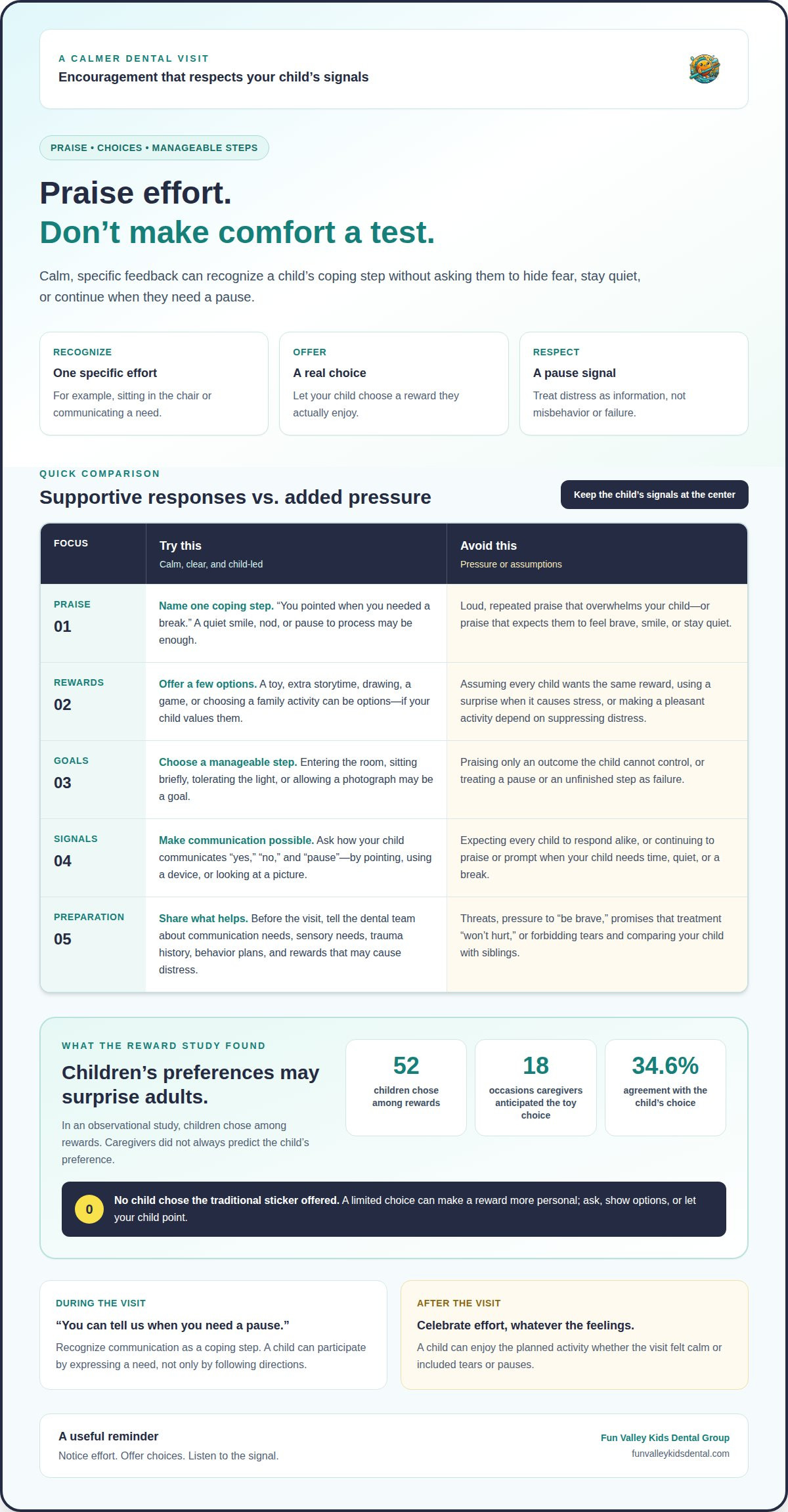
For a child who finds dental care stressful, encouragement should feel calm, clear, and safe. A small step, such as entering the room, can be a meaningful goal.
Tailoring Praise to Communication Needs
Tailored praise recognizes a child’s effort in a way that fits their communication and comfort needs. Before the visit, tell the dental team about trauma history, behavior plans, nonverbal communication, or rewards that may cause distress. Explain how your child communicates “yes,” “no,” and “pause,” whether by pointing, using a device, or looking toward a picture.
During the appointment, use a steady voice and name one specific action: “You pointed when you needed a break.” Avoid loud, repeated praise if it overwhelms your child. Some children may prefer a quiet smile, a nod, or time to process before anyone responds. Notice their signals and let the dental team know what helps.
Offering Reward and Visit Choices
A useful reward is one the child values, not one adults assume they should like. Offer a few options, such as a toy, extra storytime, or choosing a favorite activity afterward. If your child dislikes surprises, show the options beforehand and let them point, gesture, or select a picture.
Children’s preferences can differ from caregivers’ expectations. In an observational study, 52 children chose among rewards; caregivers correctly anticipated their toy choice on 18 occasions and agreed with the child’s choice in 34.6% of cases. No child chose the traditional sticker offered. A limited choice helps make the reward more personal.
Keep goals achievable for anxious or sensory-sensitive children. A first-visit goal might be entering the room; another might be sitting briefly, tolerating the light, or allowing a photograph. Praise the step your child manages, not an outcome they can’t control. If the child needs to stop, treat that signal as useful information, not a failure.
Before a visit, avoid threats, promises that treatment “won’t hurt,” or pressure to be brave. Afterward, don’t forbid crying, compare your child with siblings, or make a pleasant activity depend on hiding distress. Instead, recognize one effort, such as communicating a need, and gently offer a next step. You can plan a favorite activity whether your child feels calm or upset.
Calm, specific feedback and genuine choices are usually more helpful for a child experiencing dental anxiety than loud or constant praise. For an anxious or sensory-sensitive child, achievable goals can include entering the room, sitting briefly, tolerating the light, or allowing a photograph. Keep the response measured and the goal manageable, so praise recognizes effort rather than demanding a particular emotional reaction.
Preferred rewards for good behavior at the dentist?
After a dental visit, choose a nonfood reward your child genuinely enjoys, such as extra storytime or choosing a family activity. Make it a celebration of effort, not a condition for staying quiet or completing treatment.
Reward Salience and Cooperation
A reward is meaningful when the child values and notices it. A small, chosen reward can give a child something positive to anticipate, but it shouldn’t replace clear explanations or a sense of safety during treatment.
For example, a child who likes drawing may value choosing a picture to make at home more than receiving a toy. Ask what sounds enjoyable, then connect encouragement to a specific action, such as opening their mouth when ready or using a signal to request a pause. Cooperation can include communicating a need, not only following directions.
Small Rewards Without Coercion
A small reward works best as recognition, not a bargain that pressures a child to endure distress. Offer a sticker, a small toy, or a favorite activity afterward, while making clear that the child can express discomfort or ask for a break.
Stickers are familiar, but they aren’t every child’s favorite. A child might prefer a token, a short game with a caregiver, or choosing the bedtime story. If a tangible item feels distracting or unwelcome, skip it and offer specific praise instead: “You told us when you needed a pause.”
Choosing Rewards That Avoid Unhealthy Habits
Nonfood rewards can celebrate a visit without making sweets part of dental care. Try extra storytime, choosing music for the ride home, or picking a game to play together. Keep the activity modest and enjoyable, not a payment for suppressing fear.
Caregivers may guess wrong about what a child prefers, so offer a few options and let the child choose. For example, show two toys or name two activities; a child can answer aloud, point, or use a communication device. A limited choice is easier to manage than a surprise reward chosen by an adult.
Before treatment, describe the reward plainly: “After the visit, you can choose a story.” Avoid promising a particular outcome or tying the reward to not crying. During treatment, the dentist can calmly acknowledge a helpful coping step. Afterward, recognize the effort and let the child enjoy the planned activity, even if the visit included tears or pauses.
Dental anxiety and comfort
Dental anxiety can show up as silence, tears, questions, or pulling away. Children feel more supported when adults respond to what they communicate instead of expecting every child to react alike.
Pediatric dentists use behavior guidance to help children become more familiar with care. Gradual preparation can begin with entering the room, meeting the dentist, or seeing a mirror before an examination.
A predictable sequence can make the visit easier to understand. For example, explain that the dentist will talk first, then look at the teeth, and pause if the child signals discomfort. A parent’s calm presence can also offer support during treatment.
Small, genuine choices help children take part. A child might choose which toothpaste flavor to use, whether to hear an explanation before a step, or which video to watch. Interactive tools, videos, and storytelling can also provide a welcome focus during a visit.
Use encouragement to recognize coping, not silence fear. “You told me the light felt bright” validates communication; “Stop crying” can add shame. Avoid comparing a child with a sibling or saying crying is not allowed. These responses can make it harder for a child to express needs clearly.
If a child cries throughout an appointment, treat that response as information. The dental team should consider pain, sensory demands, the child’s understanding, and whether the planned care remains appropriate. A bright light, unfamiliar sounds, or uncertainty about what comes next may affect how the child copes.
Positive reinforcement should never dismiss pain or pressure a distressed child to continue. Praise a manageable action, such as raising a hand to request a pause, then give the child time to respond. A planned enjoyable activity afterward can mark the visit without requiring the child to hide emotions.
At home, describe the visit in simple, honest language. For example, say, “The dentist will look at your teeth, and you can tell us if you need a break.” Avoid promising that nothing will feel uncomfortable. Clear expectations help a child prepare without making a promise adults may not be able to keep.
Comfort doesn’t mean completing every step without emotion. A child who asks questions, needs a pause, or cries is still communicating. Responding calmly helps the family and dental team understand what support could make the next step more manageable.
Regular encouragement can help make dental visits feel more manageable as children grow. Positive reinforcement is one way to support children who feel anxious about dental care.
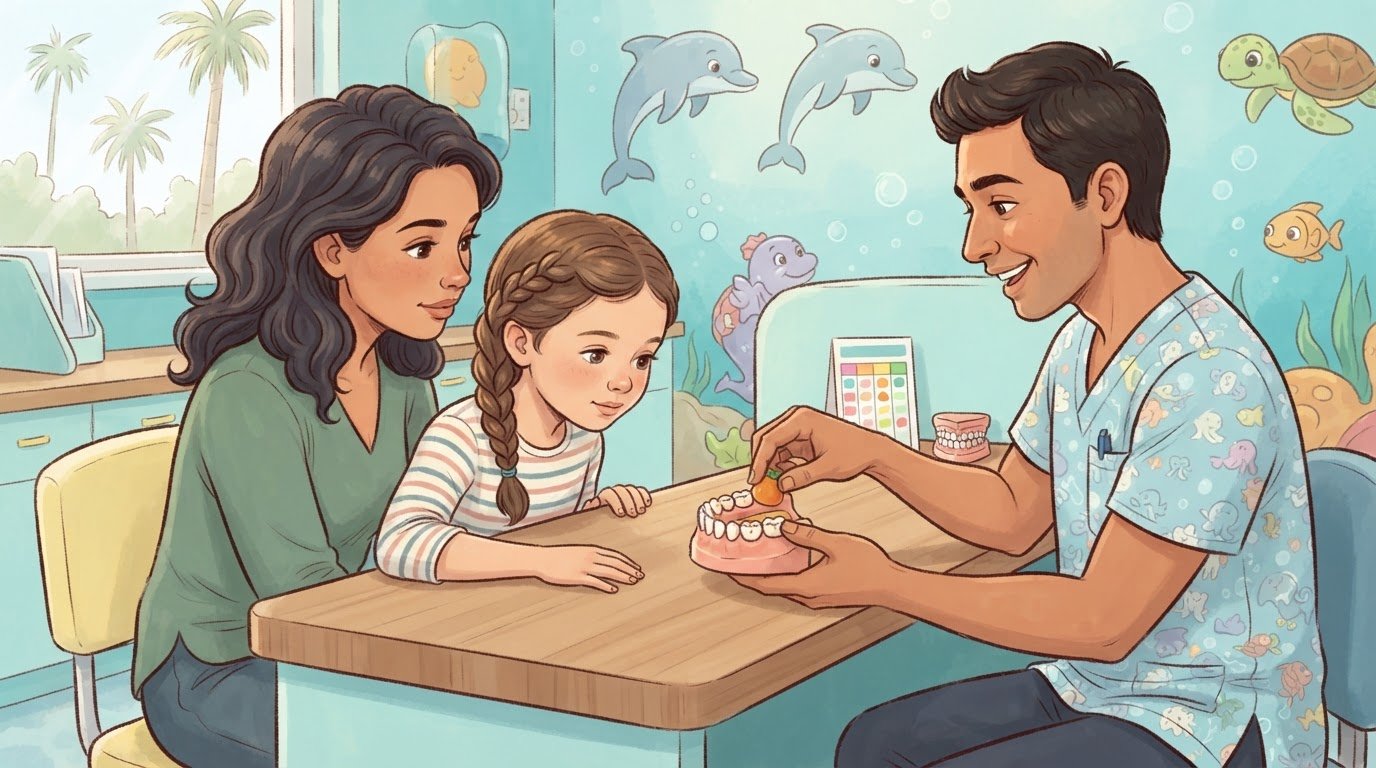
Positive feedback and reinforcement
Positive feedback recognizes a child’s helpful effort during care. Examples include noticing a steady breath, a question, or a signal for a pause.
Positive Feedback During Dental Visits
Positive feedback names an action the child can repeat, rather than judging their personality. “You opened when you felt ready” links praise to a clear moment. Immediate, specific words help a child connect their coping choice with encouragement.
Keep the response sincere and suited to the child. A quiet “You let me know what you needed” may feel better than applause or repeated praise. If the child looks away or becomes tense, pause and give them room. Encouragement should recognize effort without suggesting that fear or discomfort is wrong.
Examples of Positive Reinforcement
Positive reinforcement pairs a helpful action with a supportive response. During an appointment, a parent might say, “You raised your hand when you needed a break,” or “You asked what would happen next.” A warm smile, a nod, or a brief celebratory moment can also affirm the child’s communication.
At home, caregivers can notice a child brushing before bed or trying a new part of the routine. “You remembered to brush your back teeth” points to a specific habit. Praise works best as encouragement, not a demand for perfect brushing or a way to dismiss discomfort.
Timing matters. A comment soon after a coping step makes the connection clearer than general praise at the end of the day. For example, after a child follows an explanation or asks for more time, recognize that choice right away. Keep the words short enough for the child to understand while focused on the visit.
Consistency can help children understand which actions adults value. If a parent praises a child for communicating a need at home and the dental team acknowledges the same skill during an appointment, the message is clear. The goal isn’t to reward silence; it’s to support participation, communication, and confidence.
After the appointment, name one concrete success and one possible next step. You might say, “You told us when you needed a pause. Next time, we can practice asking what comes next.” This keeps the memory focused on a skill the child used and a manageable idea for the future.
Use reinforcement without comparing siblings or demanding a particular reaction. A child who cries can still show effort by staying in the room, asking a question, or listening to an explanation. Recognize that step honestly, then let the child respond in their own way.
How positive reinforcement works in dental care
Positive reinforcement connects a child’s helpful action with a supportive response. During a dental appointment, that response might be specific praise after the child asks a question or uses a pause signal.
To prepare, explain the visit in simple steps and choose one small goal together. For example, tell your child, “The dentist will explain the mirror, then look at your teeth.” Praise effort afterward, whether your child completes the examination or needs a break.
The learning process has three parts: a clear situation, an action, and a response. A dental light comes on; the child looks toward it or asks what it does; an adult responds calmly and explains. When praise follows a coping action, the child can connect that action with feeling heard.
Specific feedback makes that connection clearer than a broad “Good job.” Try, “You asked before the dentist moved the mirror,” or “You told us the light felt bright.” These words show which skill helped the visit move forward. They recognize communication, not just stillness or compliance.
Preparation can include practicing a simple phrase at home, such as “Please show me first.” A caregiver can respond, “You asked clearly,” then explain how the child can use the same words during the appointment. For a child who communicates without speech, practice a gesture, picture, or device response instead.
Reinforcement can also support oral care outside the dental office. If a child starts brushing independently, notice the action: “You picked up your toothbrush after breakfast.” This links praise to a repeatable habit. Avoid turning each routine into a prize transaction; attention and acknowledgment can be meaningful responses.
Keep expectations flexible. A child may manage one step today, such as entering the treatment room, and another step during a later visit. If distress rises, don’t use praise to push through pain or fear. Pause, listen, and help the child communicate what feels difficult.
A predictable pattern builds trust: explain what comes next, let the child respond, then acknowledge a useful coping action. For instance, after the child signals for a pause, the adult can honor it and say, “You let us know what you needed.” That response shows the child their signal matters.
For an upcoming exam or cleaning, share your child’s communication preferences and practice one simple request together. Plan a pediatric dental visit with a team that can help make the steps understandable and supportive.
Fun Valley Kids Dental Group
Fun Valley Kids Dental Group in Sun Valley, California, provides pediatric dental care in a child-friendly setting where families can discuss ways to make visits more manageable. A pediatric dental exam gives parents and children a chance to talk through what to expect and share communication strategies that help.
For routine care, professional dental cleanings and preventive dental care support children’s oral health. Families can discuss their child’s needs with the dental team and plan a visit that feels clear and supportive.
Contact Fun Valley Kids Dental Group to discuss your child’s dental visit.
Make the next visit a shared milestone
A child’s comfort can grow through small experiences that feel understandable and respectful. Let your child’s response guide your approach to the next appointment; what felt manageable this time can be a starting point, not a demand to do more next time. Thoughtful positive reinforcement for dental visits leaves room for changing needs, honest emotions, and progress at your child’s pace.
You can also make the appointment a chance to build familiarity with dental care, rather than a test of bravery. Fun Valley Kids Dental Group welcomes families who want to discuss their child’s needs and plan a supportive visit. Contact Fun Valley Kids Dental Group to take the next step toward care that helps your child feel heard and supported.
Frequently Asked Questions
Can praise make anxiety worse?
Yes, especially if praise draws attention to a child who prefers not to be singled out. Some children may feel watched when adults celebrate them in front of others. Try a quiet acknowledgment or wait until you’re alone together, then notice how your child responds. If a phrase seems to increase tension, switch to a neutral comment about what happens next.
Should I promise a toy before the visit?
Avoid promising a particular item if plans might change or the reward depends on completing treatment. A predictable plan can still include an enjoyable moment afterward, such as choosing a story or activity. Explain the plan plainly and keep it separate from whether care proceeds. This helps prevent a child from feeling responsible if the appointment changes or a step needs to wait.
What if my child cries the whole time?
If tears continue, focus on what your child needs in that moment rather than asking them to explain everything immediately. Once they’ve settled, briefly note when the crying began and what happened just before it. That timeline can help the family and dental team plan a more useful conversation before the next appointment.
How does positive reinforcement help children feel comfortable at the dentist?
Recognizing a child’s role in the visit can make their participation feel worthwhile. For example, a child who chooses which question to ask first contributes to the conversation. Positive reinforcement for dental visits can support that involvement, especially when adults consistently follow through on agreed choices and explanations.
How should dentists use praise and encouragement during pediatric dental exams?
During an exam, dentists can keep comments accurate and connected to the child’s participation, rather than making broad judgments about being “good.” A simple explanation such as “We’re checking this tooth now” helps the child understand what’s happening. If the child asks a question, answering clearly can be more useful than immediately redirecting them with praise.
How can positive reinforcement be adapted for autistic children or children with sensory sensitivities?
For an autistic child or a child with sensory sensitivities, make the sequence and language of the visit as understandable as possible. A caregiver can share whether the child prefers literal wording, a visual schedule, or advance notice before transitions. Use consistent terms for familiar steps, and avoid metaphors that could make instructions harder to understand.
Are there risks or drawbacks to using rewards for dental visits?
Yes. If every appointment depends on a prize, a child may focus more on the reward than on understanding or taking part in care. Positive reinforcement for dental visits should recognize a child’s growing participation, not become the only reason to attend. Rewards should also suit the child; an unwanted item or activity can feel like another demand rather than a celebration.


Comments