


Ways to help when your child is scared of the dentist

A calmer dental visit often starts before your child reaches the chair. If you’re wondering what to do when your child is scared of the dentist, gently ask what feels worrying and tell the dentist about those fears before the appointment. Talking positively about the visit, practicing with a stuffed animal, and bringing a favorite comfort item can help your child feel more prepared.
It’s understandable to hope one small trick will solve everything, but repeated or intense fear may call for a more thoughtful plan with the dentist. Sharing what triggers your child’s anxiety, whether it’s unfamiliar sounds, tools, or a past experience, helps the dental team shape the visit around their needs. You’ll learn what to try at home, how calming strategies compare with a fuller anxiety care plan, and what to discuss with the dentist, including when to ask about nitrous oxide sedation. Each step can help your child feel heard, supported, and more ready to explore dental care at their own pace.
Table of Contents
Planning care for children with deeper or repeated dental fear
When dental fear returns at every appointment or keeps your child from attending, plan support around the specific trigger. Ask what feels hardest: the unfamiliar room, a past experience, dental tools, noise, or worry about pain. Listen without dismissing the feeling. Their answer can help you describe the fear clearly and plan the next step with the dentist.
In the United States, the cost of pediatric dental visits and anxiety support varies with the type of visit, care needed, and insurance benefits. A routine exam differs from care involving additional procedures or anxiety support, so these factors affect the total.
Notice how fear affects your child’s behavior. They may cry, freeze, resist entering the office, or repeatedly ask what will happen. Fear can be a temporary reaction; it becomes more concerning when anxiety interferes with necessary care or daily life. Past frightening experiences, unfamiliar surroundings, instruments, and worry about injections can all contribute. Share patterns you notice, such as fear increasing when your child hears a drill or sees a mask.
Familiarity can make the dental setting feel less mysterious. Ask the dentist whether your child can have a brief introduction before treatment or meet the team and see the waiting area. Explain the visit in simple, positive language, such as, “The dentist will count your teeth and help keep them healthy.” Avoid promising that nothing will hurt. A favorite toy or blanket can offer familiar comfort during the visit.
Try a short pretend visit at home with a stuffed animal, following your child’s cues. The toy can sit in a chair, open its mouth, and have its teeth “counted” with a toothbrush. Let your child be the dentist, patient, or observer. If they resist, stop rather than turning practice into pressure. A favorite character from a book or show can help explain the sequence: arrive, sit in the chair, meet the dentist, and learn what happens next. Keep the story honest and calm.
Ask the dental team to explain each step before it happens. The tell-show-do approach means the dentist tells the child what to expect, shows a safe item or action, then does the step. The American Academy of Pediatric Dentistry identifies tell-show-do as a primary behavioral guidance technique. For example, the dentist might describe a mirror, let the child see it, then use it to look at a tooth. This steady sequence gives children time to understand and respond.
For recurring fear, share your child’s triggers and past experiences before the appointment, then agree on a simple plan. Discuss which words help, whether your child needs pauses, and how they can signal discomfort. If anxiety continues to prevent dental care, ask about additional support. A thoughtful plan can break an intimidating visit into smaller, more manageable steps.
2. What to Do If Your Child Is Scared of the Dentist?
Start by asking what feels difficult, then listen without dismissing your child. Worries about the chair, bright lights, sounds, or being separated from you may call for different kinds of support. Tell the dentist about these sensory concerns before the visit so the team can plan how to explain each step and offer pauses when appropriate.
A pediatric dentist is a good choice when your child needs care tailored to children’s development, communication, and comfort. A child should have their first dental visit within six months of their first tooth coming in or by their first birthday, whichever comes first. A general dentist may also see children, but a pediatric dentist focuses on children’s dental needs and experiences.
To find a child-friendly dentist nearby, look for a practice that treats children and explains how it helps fearful patients feel comfortable. Notice whether the team welcomes questions, uses child-friendly language, and can discuss your child’s specific triggers before the appointment. A child-focused setting and a clear plan for communication can make the first steps toward dental care feel more manageable. Explore child-focused pediatric dental care as one way to learn about a welcoming approach.
After the appointment, praise a specific action, not just a smooth visit. You might say, “You told the dentist when you needed a pause,” or, “You stayed in the chair while the dentist counted your teeth.” This recognizes effort and gives your child a clear example of what went well. A small routine afterward, such as choosing a story together, can mark the milestone without making dental care feel like a test.
Parents set the emotional tone. Use a steady voice and describe your own dental care in simple, neutral words, such as, “The dentist checked my teeth.” Avoid frightening details or promises that nothing will feel unusual. If your child is sensitive to sound or touch, acknowledge the concern calmly instead of dismissing it. Honest, reassuring language builds trust.
If your child refuses to cooperate, stay calm and avoid scolding, threats, or physical pressure. Tell the dentist what is happening and ask whether the visit can pause, move to a smaller step, or be rescheduled. If care is needed, the dentist can explain the options. Sedation may be discussed when appropriate, based on your child’s health history, needs, and planned treatment.
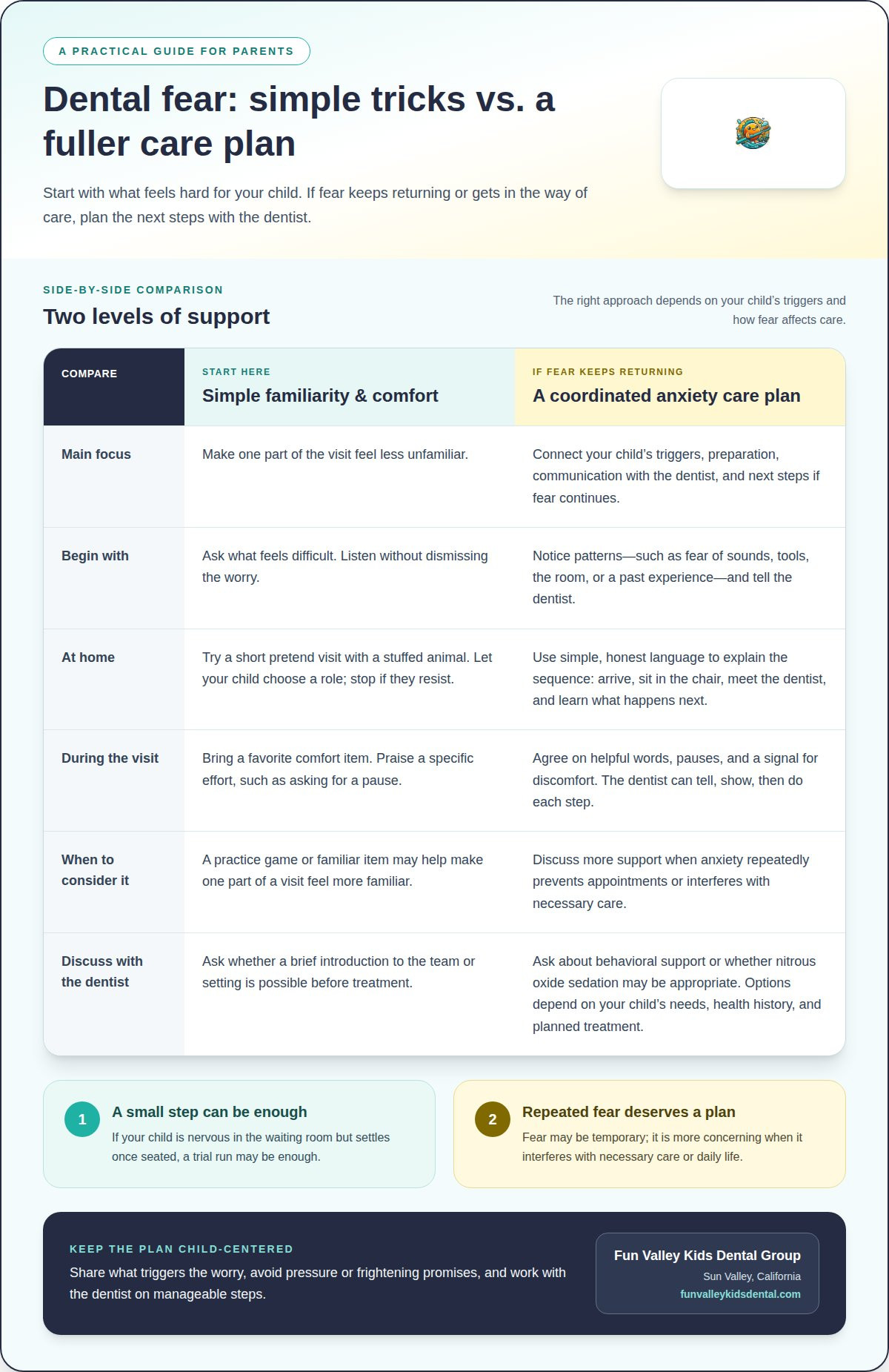
3. How Do These Tricks Compare to a Full Anxiety Care Plan?
A practice game or favorite toy can make one part of a visit feel familiar. A broader anxiety plan connects your child’s triggers, appointment preparation, communication with the dentist, and next steps if fear continues. If your child is nervous in the waiting room but settles once seated, a trial run may be enough. If fear repeatedly prevents care, discuss additional support with the dentist.
Use pretend play to rehearse a short, predictable sequence. A stuffed animal can arrive, sit in a chair, open its mouth, and have its teeth counted with a toothbrush. Let your child choose a role, then stop if the game causes more worry. The goal is familiarity, not perfect practice or a promise that every real visit will feel the same.
A trial run gives your child a chance to see the setting before treatment. Ask about an introductory visit, especially if your child is under age five, has never visited a dentist, or remembers a difficult experience. A brief look at the entrance, waiting area, or dental chair can make the next appointment feel less unfamiliar. Keep the visit low-pressure and explain its purpose beforehand.
Plan around your child’s usual routine. Choose a time when they’re rested, fed, and not rushing from another activity. Avoid scheduling near nap time or a meal if tiredness or hunger tends to affect their behavior. Familiar routines can help too: describe the appointment as the next step after breakfast rather than a surprise stop on a busy day.
For a fearful child, an earlier appointment may offer a calmer start. Children may have more energy earlier in the day, while late-afternoon visits can feel busier and noisier after school. Consider your child’s own rhythm, too. If mornings are difficult, a later time when they’re usually settled may work better than choosing an early slot simply because it sounds ideal.
These adjustments can help your child prepare, but they don’t replace individualized care when anxiety keeps returning. Before the appointment, tell the dentist what your child fears and what has helped so far. Agree on a simple plan, such as explaining each step, pausing when your child signals discomfort, or beginning with a familiar part of the visit. This makes the plan specific instead of relying on a generic calming trick.
If fear continues to prevent dental visits, ask the dentist what additional support could help. Persistent anxiety may call for professional help, including therapy to work through dental fears. The right next step depends on how strongly the fear affects care and what triggers it. Pretend play may be a useful start; ongoing avoidance deserves a broader conversation and coordinated plan.
4. CBT, relaxation techniques, and sedation options
Start with skills your child can practice before dental visits. Try slow breathing together: breathe in gently, then breathe out as if cooling warm soup. Practice at home and in the waiting room so the exercise feels familiar. During a quiet moment in the chair, your child can also picture a calming place, such as a favorite beach.
Cognitive behavioral therapy, or CBT, helps children notice anxious thoughts and practice responding to them differently. For example, a child who expects every dental visit to hurt can learn to name that worry and use coping strategies. A mental health professional can help a child work through persistent dental fear. Adults can support the process by listening without dismissing the child’s feelings.
Pediatric dentists may use behavioral guidance to make treatment easier to understand. They can explain what will happen in simple steps, introduce tools gradually, and pause so a child can ask questions. Parents can help by practicing a coping skill before the appointment, such as raising a hand to request a break. Predictable communication can support a more positive dental experience.
Some anxious children may benefit from sedation during dental treatment. Nitrous oxide, also called laughing gas, is breathed through a small nose mask. It typically takes effect within 2–3 minutes, and its effects wear off within 5 minutes after the mask is removed. Children remain conscious, can respond to instructions, and breathe on their own.
Sedation doesn’t replace listening to a child or preparing them for care. It may be considered when anxiety makes needed treatment difficult, but the right option depends on the child’s needs, health history, and planned treatment. The dentist evaluates these factors before recommending sedation. No single approach suits every child, so discuss both behavioral strategies and treatment needs.
Talk about sedation with the dentist before the appointment, not while your child is already in the chair. Describe what your child fears, what has helped, and any relevant health history. Ask what the recommended option involves, how your child will be monitored, and what instructions apply before and after treatment. A parent or guardian must give permission before sedation is used.
If you’re wondering what to do when your child is scared of the dentist, match the support to the fear. Practice breathing for mild nerves; seek therapy when anxiety persists; discuss nitrous oxide when a dentist believes it may fit. These steps can help your child build coping skills and gradually overcome fear without treating every worried reaction as a crisis.
5. Communicating anxiety triggers to the dentist
A useful conversation starts with specific observations, not a general label like “nervous.” Before the appointment, note what your child says or does: covering their ears at a hand dryer, pulling away when someone examines their mouth, or becoming distressed at the sound of a dental instrument. Tell the dentist when the reaction begins and what seems to make it stronger. These details can help the team plan a more predictable visit.
Separate what you’ve observed from what your child has told you. For example, explain, “She says the moving chair surprises her,” or, “He became quiet after a difficult visit.” Avoid assuming your child is being stubborn or dramatic. A negative experience may shape later anxiety, even if your child can’t explain every detail. Pediatric dentistry works best as a partnership: parents share context, and the dental team explains care in child-friendly steps.
Describe sensory triggers clearly. “The sounds are scary” is a start, but “the humming noise makes him cover his ears” gives the dentist a useful cue. Mention whether bright lights, unfamiliar tastes, waiting, or close physical contact seem difficult. Also share what helps, such as knowing before a tool comes near, sitting beside a parent, or taking a pause. Don’t promise that a particular adjustment will remove fear; explain it as information the team can use.
Ask your child how they want to communicate during care. A raised hand, a simple “pause” signal, or pointing to a picture can help them speak up when words feel hard. Agree on the signal before entering the dental office, then tell the dentist what it means. If your child struggles to describe anxiety, a drawing or stuffed animal can help them show which part feels uncomfortable.
Share relevant history before treatment begins, including frightening appointments, reactions to dental tools, or concerns about injections. Keep the summary short and practical: what happened, what your child fears now, and what response has helped. Include any health needs that may affect care. This gives the dentist a clearer starting point than learning about the trigger after distress builds.
End the conversation by agreeing on one manageable first step, such as explaining the room before beginning or checking in before using a tool. If you’re preparing for a visit, share your child’s anxiety triggers with a pediatric dental team so the conversation can begin with what your child needs. Clear details turn parental insight into a practical plan, helping the child feel heard instead of hurried.
Fun Valley Kids Dental Group
Fun Valley Kids Dental Group can help families take a thoughtful next step when dental fear makes routine care challenging. At its Sun Valley office, the pediatric dental team provides exams and cleanings, along with preventive care. Tell the team what your child finds difficult when arranging care, so the conversation can start with their specific worries.
If your child needs a dental visit but feels anxious, contact Fun Valley Kids Dental Group in Sun Valley to discuss an appointment.
Make the Next Visit a Manageable Step
If you’re wondering what to do when your child is scared of the dentist, set a gentle goal for the next visit: not “feel no fear,” but take one small step with support. Your child might enter the room, sit in the chair, or simply talk with the dental team. A visit can still be worthwhile even if confidence grows gradually. Keep the goal flexible, and let your child’s response guide what feels possible next time.
Dental confidence develops when a child’s concerns are heard and their pace is respected. You don’t need to solve every worry before seeking care. A conversation with a pediatric dental team can help you find a practical starting point for your family.
Contact Fun Valley Kids Dental Group to discuss your child’s dental visit and next steps. With patience and a supportive plan, your child can keep moving toward a brighter, more comfortable relationship with dental care.
Frequently Asked Questions
How Do These Tricks Compare to a Full Anxiety Care Plan?
Simple tricks can help with a specific worry, while a broader plan connects preparation, communication, and support over time. A comfort item may help during one visit, but repeated appointment avoidance calls for a conversation with the dentist about patterns and next steps. Adjust the plan as your child responds instead of relying on one calming idea for every visit.
What Is Dentophobia?
Dentophobia is an intense fear of dental care that can interfere with getting treatment. It goes beyond feeling uneasy before an appointment; a child may avoid visits or experience severe distress. Dental fears can relate to pain, unfamiliar tools, sounds, or a past experience. If fear repeatedly prevents care or disrupts daily life, discuss the pattern with a dental professional and consider additional emotional support.
What Is Pediatric Dentist Anxiety?
Pediatric dental anxiety describes worry or distress a child feels about dental visits or treatment. A child might ask repeated questions, become quiet, cry, or resist entering the treatment area. These reactions can arise from uncertainty, sensory discomfort, or memories of an upsetting experience. Share the behaviors you notice and the situations that trigger them so the dental team can better understand what your child needs.
What to Do If Your Child Is Scared of the Dentist?
Ask your child what feels worrying, then share their answer with the dentist before the visit. Agree on one small way your child can express a need, such as raising a hand for a pause. Afterward, praise a specific effort, like speaking up or entering the room. If fear keeps preventing care, ask about a more tailored plan instead of repeating an approach that hasn’t helped.
Which Approach Should You Try First?
Start with the least demanding step that fits your child’s reaction. If they’re uneasy but willing to attend, try a short, truthful explanation and a familiar comfort item. If they become distressed well before appointments or repeatedly avoid them, contact the dentist before scheduling the next visit. Describe what you’ve observed, then decide together whether gradual familiarization or additional support makes sense.
How Can I Help My Child Feel Less Scared of the Dentist?
Give your child a small sense of control without making them responsible for treatment. Let them choose a toy to bring or a song to listen to while getting ready. Use calm, ordinary words about dental care, and avoid describing frightening possibilities. If your child names a specific concern, such as a sound, share it with the dental team so they can respond to that worry.
How Should I Prepare My Child for Their First Dental Visit?
A child should have their first dental visit within six months of their first tooth coming in or by their first birthday, whichever comes first. Before the appointment, explain that the dentist will look in their mouth and help care for their teeth. Keep the explanation brief, and bring a familiar toy if it helps your child settle into a new place.
What Should I Tell My Child Before a Dental Appointment?
Tell your child what to expect in simple, honest language. For example, say, “The dentist will look at your teeth and explain what they see.” Avoid promising that nothing will feel strange or using words that suggest danger. Invite your child to share what they’re wondering about, then pass those concerns to the dental team before the appointment begins.


Comments